
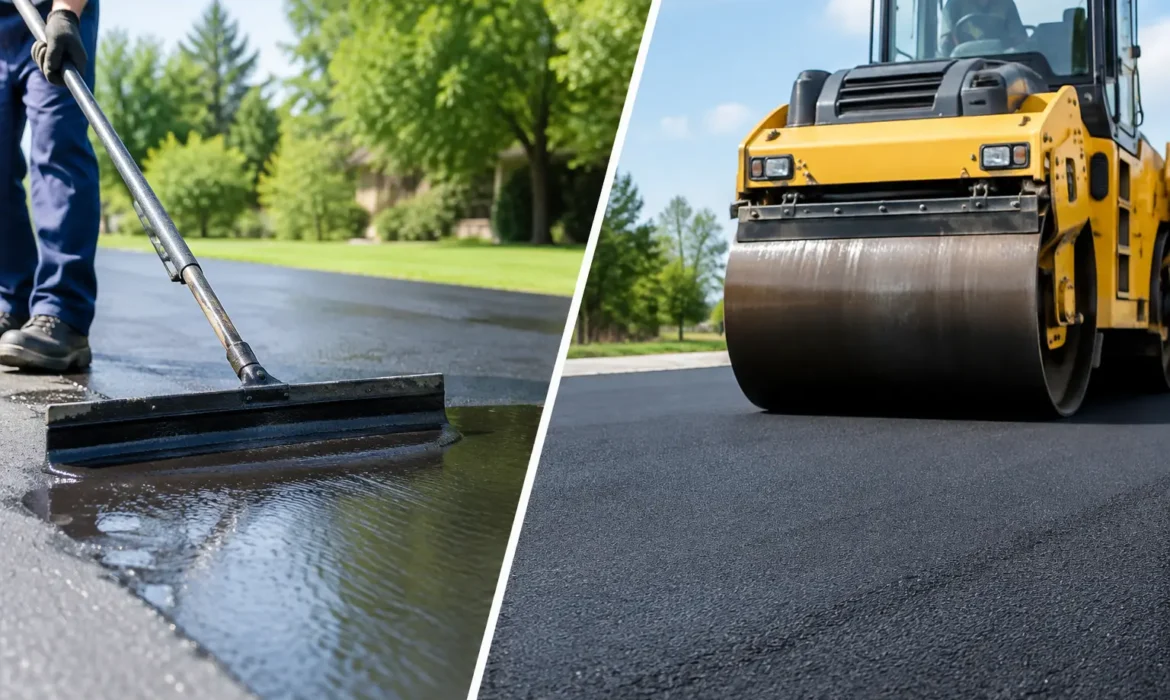
A faded driveway or worn parking lot can make a property look neglected long before it stops functioning. The right maintenance decision protects the surface, improves curb appeal, and helps prevent a manageable issue from becoming a major pavement replacement. When weighing sealcoating versus asphalt resurfacing, the key question is not which service is better overall. It is which one matches the current condition of your pavement.
Sealcoating is preventive maintenance for asphalt that is still structurally sound. Resurfacing is a more substantial repair that renews the driving surface when wear has gone beyond what a protective coating can address. Knowing the difference helps homeowners, property managers, and business owners plan work at the right time.
Sealcoating Versus Asphalt Resurfacing: The Real Difference
Sealcoating applies a protective coating over existing asphalt. This coating restores a richer, darker appearance while helping shield the pavement from sunlight, water, vehicle fluids, and normal weather exposure. It is intended to preserve asphalt, not rebuild it.
Asphalt resurfacing, sometimes called overlaying, involves preparing the existing pavement and installing a new layer of asphalt over it. Before the new asphalt is placed, damaged areas may need repair, cracks may require attention, and the surface must be properly prepared so the overlay has a stable base. Resurfacing creates a new wearing surface with a smoother, more uniform finish.
The distinction matters because a sealcoat follows the contours of the pavement underneath. It can refresh a weathered surface, but it will not level low spots, correct widespread cracking, or restore asphalt that is breaking apart. A new asphalt overlay can improve the appearance and function of worn pavement, but it also depends on the underlying base being in serviceable condition.
When Sealcoating Is the Right Choice
Sealcoating makes sense when asphalt is showing cosmetic aging but remains fundamentally intact. A driveway or lot may appear gray, dry, or slightly rough after years of sun, rain, snow, and daily traffic. If there are only minor cracks and no serious movement, crumbling, or drainage concerns, a professionally applied sealcoat can extend the useful life of the surface.
For residential properties, sealcoating is often a practical way to maintain driveway curb appeal between larger repairs. For commercial properties, it helps keep parking areas looking cared for and can support a cleaner overall impression for customers, tenants, and visitors.
Timing is a major advantage. Applying sealcoat before the asphalt becomes severely oxidized or cracked helps slow deterioration. In Maryland, changing seasonal conditions can be tough on pavement. Moisture entering small openings and repeated temperature shifts can gradually make those openings larger. Routine maintenance gives the surface another layer of protection before that cycle accelerates.
Sealcoating is not the answer when the pavement has alligator cracking, deep potholes, widespread raveling, or areas that have sunk or heaved. Covering those conditions may make them look less noticeable briefly, but the underlying problems will remain. A contractor should inspect the surface before recommending a maintenance treatment.
What a sealcoat can and cannot do
A quality sealcoat can improve color, help protect against weathering, and create a more consistent appearance. It can also make pavement easier to maintain by creating a renewed protective layer at the surface.
It cannot add structural strength to weakened asphalt. It will not repair a failing base, erase substantial depressions, or stop advanced cracking from returning. Property owners get the best results when sealcoating is viewed as routine preservation rather than a shortcut around needed repairs.
When Asphalt Resurfacing Makes More Sense
Resurfacing is often the stronger option when pavement has reached the point where its top layer is worn out but the foundation beneath it is still stable. Common signs include extensive surface cracking, rough travel paths, weathered asphalt aggregate, numerous patched areas, and a generally uneven appearance that sealcoating cannot improve.
A fresh overlay provides more than a darker color. It creates a new, smooth asphalt surface that can improve driving comfort, appearance, and day-to-day usability. For a commercial parking area, resurfacing can be especially valuable when the existing surface is affecting traffic flow or presenting a poor first impression. For a residential driveway, it can restore a clean, finished look without removing every part of the existing pavement.
Resurfacing is not always appropriate, either. If the pavement is sinking, holding water because of base failure, or showing extensive structural deterioration, simply installing new asphalt over it may not provide a lasting result. Those conditions may call for targeted reconstruction or more extensive paving work. The condition below the visible asphalt matters as much as the condition on top.
Preparation determines overlay performance
The quality of resurfacing depends heavily on preparation. Cracks, failed sections, edges, transitions, and drainage patterns should be evaluated before the overlay is installed. If water is already collecting in a low area, adding a new surface without addressing that issue can allow the same problem to continue.
Proper surface preparation also helps the new asphalt bond and perform as intended. Experienced paving crews evaluate whether repairs are needed first, how the new surface should meet existing walkways or entrances, and how to preserve practical drainage. These details affect durability long after the equipment leaves the property.
How to Choose Based on Pavement Condition
The most useful way to compare sealcoating and resurfacing is to assess the severity and source of the damage. Surface appearance alone can be misleading. A pavement that looks faded may be an excellent sealcoating candidate, while a dark-looking surface with widespread cracking may need more significant work.
Consider sealcoating when the asphalt is largely smooth and stable, the damage is minor, and your goal is to preserve a serviceable surface. It is also a strong fit for properties that follow a regular pavement-maintenance plan instead of waiting until visible deterioration becomes extensive.
Consider resurfacing when the surface is worn, rough, heavily patched, or showing broad areas of cracking, but the supporting base remains dependable. Resurfacing is usually chosen when the property needs a meaningful visual and functional renewal rather than simple protection.
If you are unsure, pay attention to drainage and pavement movement. Water that pools after rainfall, recurring potholes in the same area, crumbling edges, and sections that feel uneven under vehicles often point to concerns beyond routine sealcoating. An on-site evaluation can identify whether the issue is limited to the surface or connected to the pavement structure underneath.
Planning Work Around Property Use
Both services require thoughtful scheduling, especially for active homes and businesses. Sealcoating needs time to cure before normal vehicle traffic resumes. Resurfacing involves more preparation and installation activity, so access planning is important for driveways, customer parking, loading areas, and building entrances.
For commercial properties, a phased approach may help keep parts of the site available while work is completed in sections. Residential customers may need to arrange alternate parking for a short period. Clear communication about access, timing, and expected surface use helps the project stay organized and reduces disruption.
Weather also affects results. Asphalt and sealcoating materials need suitable conditions for proper application and curing. A dependable contractor will recommend a schedule that supports the performance of the finished work rather than rushing a job during unsuitable conditions.
Get the Right Repair Before Damage Spreads
Sealcoating and resurfacing both serve a valuable purpose, but they belong at different stages of pavement life. Applying the right service at the right time protects your investment, improves the property’s appearance, and helps you avoid treating a structural problem as though it were only cosmetic.
For Maryland property owners, a hands-on assessment is the best next step when the answer is not obvious. All Star Contracting Services can evaluate the visible wear, drainage, traffic demands, and overall condition of your asphalt to recommend work that supports a durable, attractive surface. A well-timed decision today can keep your driveway or parking area working better through the seasons ahead.