
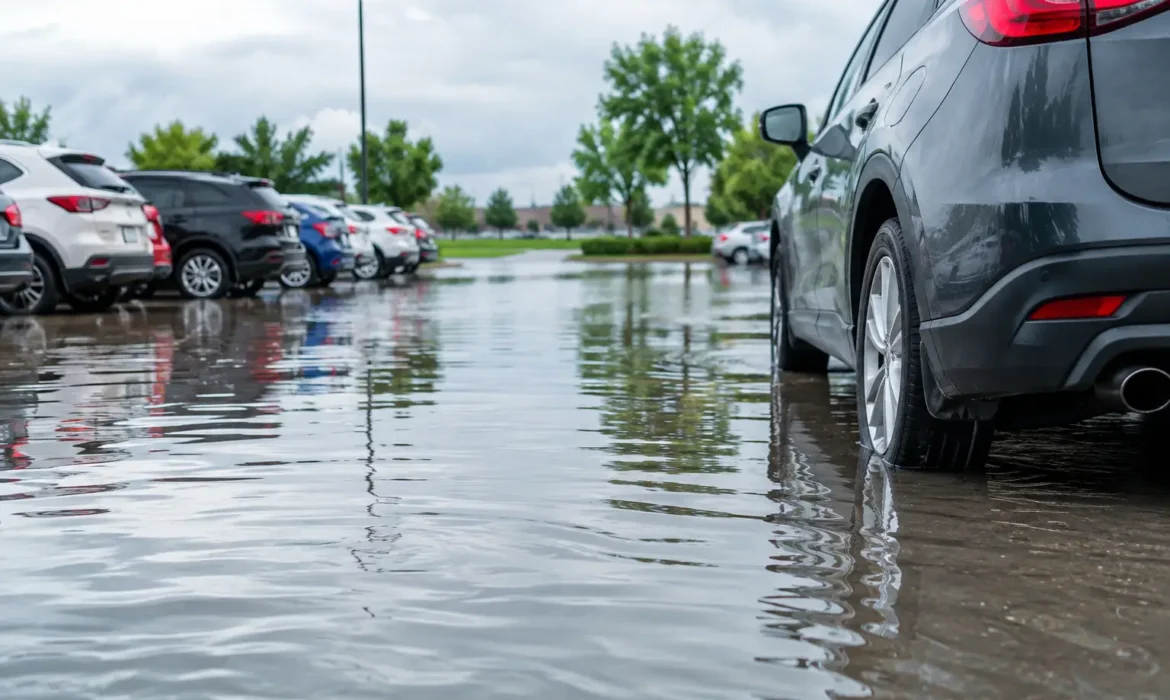
A parking lot can look fine in dry weather and still reveal serious problems after a hard rain. Property owners often ask, what causes parking lot flooding, when water begins pooling near entrances, parking spaces, drive lanes, or loading areas. The answer is rarely just “too much rain.” In most cases, flooding points to a drainage, grading, or pavement condition that is preventing water from moving where it should.
Standing water affects more than appearance. It can weaken asphalt, create slippery walking conditions, obscure pavement markings, accelerate potholes, and leave customers or tenants with a poor first impression. Addressing the cause early helps protect the surface and keeps the property safer and more functional through Maryland’s changing weather.
What Causes Parking Lot Flooding?
Parking lot flooding happens when rainfall cannot drain off the surface quickly enough or cannot reach a functioning outlet. The visible puddle may be in one location, but the source of the issue can be uphill, underground, or within the pavement itself.
A properly built lot is designed with controlled slopes that guide water toward drainage points. When that slope changes, the outlets clog, or the pavement settles, water finds the lowest available area and stays there. The longer it remains, the greater the chance of surface deterioration and water intrusion below the asphalt.
1. Poor Grading or Inadequate Slope
Grading is one of the most common reasons a parking lot holds water. A paved surface needs enough slope to direct runoff away from buildings, pedestrian routes, and traffic areas. If portions of the lot are too flat, or if the slope directs water toward the wrong area, even moderate rainfall can leave large pools behind.
Poor grading may result from an original installation issue, but it can also develop over time. Settlement in the base beneath the pavement can change the surface profile. In other cases, additions such as curbs, sidewalks, islands, or patched areas unintentionally interrupt the original drainage path.
The right correction depends on the size and location of the problem. A small low area may be repaired by removing failed material and restoring the proper grade. Widespread drainage trouble may call for more extensive pavement reconstruction so the entire surface drains consistently.
2. Depressed Areas and Pavement Settlement
A low spot is not always caused by poor initial grading. Asphalt and the aggregate base beneath it can settle when the subgrade is weak, drainage below the surface is poor, or repeated vehicle traffic compresses the area. Heavy trucks are especially likely to expose weaknesses near drive lanes, dumpsters, loading zones, and entrance points.
These depressions collect water first. Over time, the trapped water can enter small cracks and work its way beneath the asphalt. That moisture softens the supporting base, leading to deeper settlement, cracking, and eventually potholes.
Simply applying a thin patch over a sunken section may improve the appearance for a short time, but it will not always correct the underlying cause. A professional evaluation should determine whether the base needs repair before the surface is restored.
3. Clogged or Damaged Drainage Inlets
Drainage inlets, catch basins, and grates are meant to collect runoff and move it away from the lot. When leaves, mulch, trash, sediment, or debris block these components, water has nowhere to go. The lot may flood around a single drain even though the pavement slope is otherwise sound.
This problem is especially common after storms and during fall leaf drop. A clogged inlet can be easy to overlook until a downpour tests the system. Broken grates, damaged basin structures, and settling around an inlet can also prevent water from entering as intended.
Routine inspection and cleaning are practical maintenance steps. If water consistently ponds around a clear inlet, the issue may be the surrounding grade, a failed basin, or a drainage line that needs closer attention.
4. Cracks, Potholes, and Failing Asphalt
Cracked asphalt does not cause every flooding issue, but it makes water damage worse. Cracks create direct paths for rainwater to enter the pavement structure. As moisture reaches the base, the materials below can lose stability. The asphalt then breaks apart under traffic, creating potholes and uneven areas that trap even more water.
Freeze-thaw cycles add pressure to the problem. Water that enters cracks can freeze during cold Maryland weather, expand, and widen the opening. When temperatures rise, additional water moves into the damaged area. What begins as a small crack can become a recurring ponding and repair issue.
Crack sealing and sealcoating can help preserve a structurally sound surface, but they are maintenance measures, not replacements for drainage repairs. When the pavement has widespread structural failure or deep depressions, a more substantial repair is usually the dependable option.
5. Insufficient Drainage for the Lot’s Size
A lot may have drains and still flood because the drainage system cannot handle the volume of runoff. This can happen when a parking area is expanded without improving drainage, when neighboring improvements redirect water onto the property, or when landscaped areas no longer absorb water as they once did.
The amount and speed of runoff matters. Large paved areas shed water quickly, particularly during intense storms. If drainage points are too few, too far apart, or poorly positioned, runoff can collect faster than the system can manage it.
This type of issue calls for a site-specific assessment. The solution may involve adjusting grades, adding collection points, improving drainage routes, or rebuilding portions of the pavement. The goal is not to send water toward another trouble spot, but to manage it deliberately across the full property.
6. Curbs, Islands, and Landscaping That Block Runoff
Curbs and landscaped islands help organize traffic and improve curb appeal, but they can also create unintentional dams. If a curb blocks the natural path of runoff without a properly placed opening or drainage point, water may collect along the edge of the lot.
Mulch, soil, and plant growth can also build up over time and cover drainage openings. This is often seen where landscaped beds meet pavement. Water that once flowed freely toward an inlet may begin pooling at the curb because the path has narrowed or become blocked.
Periodic landscape maintenance should include checking the pavement edge and nearby drains. Keeping soil and debris out of drainage areas protects both the landscaping investment and the paved surface around it.
7. Nearby Building Downspouts and Runoff Sources
Water does not have to fall directly onto the parking lot to create flooding. Roof downspouts, adjoining driveways, and higher surrounding ground can send concentrated runoff into one section of pavement. If that flow is directed near a building entrance or a low traffic area, it can quickly overwhelm the local drainage path.
Look for flooding patterns after rain. If pooling appears in the same location every time, note where the water begins moving from. A downspout discharge, overflowing gutter, or slope from an adjacent area may be contributing more water than the lot was designed to handle.
Redirecting concentrated runoff and restoring the affected pavement grade can prevent repeat damage. The most effective repair addresses both the incoming water and the area where it is collecting.
How to Respond When Water Is Pooling
Do not wait for a small puddle to become a major pavement failure. Photograph the area during or shortly after rainfall, note how long the water remains, and watch for cracks, crumbling edges, or soft pavement nearby. These details help identify whether the problem is limited to surface drainage or involves the base beneath the lot.
Avoid relying on a quick patch as the only answer when water keeps returning. A durable repair begins with identifying why the area holds water, then correcting the grade, drainage path, and pavement structure needed for long-term performance.
For commercial properties, prompt attention also helps protect daily operations. Clear travel lanes, dry entrances, and well-maintained pavement make it easier for customers, employees, tenants, and delivery drivers to move through the property with confidence.
A parking lot should move water away without drawing attention to itself. When puddles begin to linger, a careful professional evaluation can turn a recurring headache into a lasting surface improvement.