
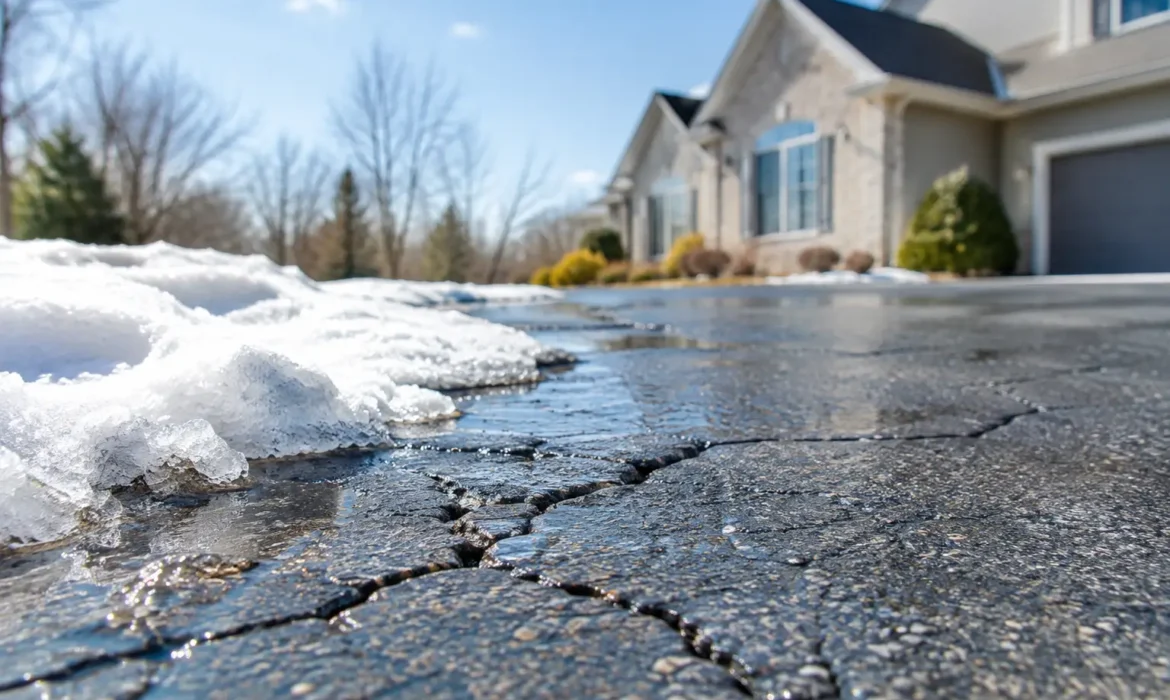
A driveway can look perfectly serviceable in December and develop a widening crack, low spot, or pothole by early spring. That is the reality behind this Maryland freeze thaw pavement guide: water enters small openings, freezes during a cold snap, expands, and weakens the surface from the inside out. Repeated temperature swings can turn a manageable maintenance issue into a larger paving repair.
For homeowners and property managers, the best response is not to wait for visible failure. A timely inspection, sound drainage, and repairs matched to the condition of the pavement can protect vehicle access, curb appeal, and the working life of the surface.
Why Freeze-Thaw Cycles Are Hard on Pavement
Asphalt and concrete are built to handle weather, traffic, and daily use, but neither material benefits from standing water. When rain or melting snow reaches a crack, open joint, worn edge, or porous area, it can settle below the surface. If temperatures drop below freezing, that trapped moisture expands.
The expansion puts pressure on the surrounding material. When temperatures rise, the ice melts and leaves more room for water to enter again. Maryland often experiences this back-and-forth pattern through late fall, winter, and early spring. One isolated freeze may not create major damage. Dozens of cycles, combined with vehicle weight and poor drainage, are a different story.
Asphalt is especially vulnerable when its protective surface has worn away or when the base beneath it is already soft. Concrete can crack when moisture enters joints or existing fractures, then freezes and pushes the slab apart. In both cases, the surface issue is often a sign that water is moving where it should not.
Maryland Freeze Thaw Pavement Guide: What to Look For
A quick walkaround after heavy rain, snowmelt, or a cold stretch can reveal problems before they become disruptive. Look closely at the pavement rather than viewing it only from a distance. Fine cracks, uneven edges, and shallow depressions are easier to address than wide breaks and deep holes.
Cracks That Are Growing or Holding Water
Hairline cracks do not always mean replacement is needed. Still, they should not be ignored. Once a crack is wide enough to admit water, the freeze-thaw process can deepen it and weaken the material below.
Pay particular attention to cracks near garage entrances, driveway edges, catch areas, curbs, and parking spaces where vehicles repeatedly turn or stop. If a crack is branching, widening, or showing separation between sections, it deserves a professional assessment. The right repair depends on whether the problem is confined to the surface or tied to base movement beneath it.
Potholes, Raveling, and Loose Aggregate
A pothole usually starts with a small area of weakened pavement. Water gets below the asphalt, traffic breaks the surface apart, and the damaged area expands. Raveling – when small stones loosen from the asphalt surface – can be an early warning that the binder is wearing down and moisture is gaining access.
For commercial properties, these conditions can affect vehicle movement, pedestrian safety, and the appearance of the entire site. For residential driveways, they can create a rough approach to the garage and allow damage to spread into otherwise sound pavement.
Low Spots and Drainage Paths
Water should move away from paved areas rather than sit on them. Puddles that remain long after rainfall may indicate a low spot, uneven settlement, or a drainage issue beyond the pavement itself. During winter, these areas are more likely to freeze, creating slippery conditions and placing repeated stress on the surface.
A repair that only covers the top of a low area may not last if the underlying drainage problem remains. In some cases, the lasting solution involves restoring proper slope, rebuilding a failed section, or correcting the base before new material is installed.
Broken Edges and Sinking Areas
Driveway and parking lot edges receive less support than the center of the pavement. They can break down when vehicles drive too close to the side, water erodes adjacent soil, or the base extends insufficiently beneath the asphalt. Once an edge begins to crumble, water can enter laterally and speed up the failure.
Sinking or soft spots are more serious. They can point to water-related base damage, poor compaction, or soil movement. These areas should be evaluated before sealcoating or surface patching, because a cosmetic treatment will not correct instability below the pavement.
Match the Repair to the Condition
Not every crack calls for full replacement, and not every damaged area is a candidate for a simple patch. The best decision comes from evaluating the surface, base, drainage, age, and traffic load together.
Crack filling can help keep water out of isolated cracks when the surrounding pavement remains stable. Localized patching can address a contained pothole or failed section, provided the damaged material is removed and the base is properly restored. If widespread cracking, settlement, or surface deterioration appears across the area, resurfacing or replacement may provide better long-term value than repeated spot repairs.
Concrete calls for the same practical judgment. A small, stable crack may be monitored or repaired, while slabs that have shifted, settled, or broken into multiple pieces may need removal and replacement. The goal is not simply to make the surface look better for a season. It is to restore a dependable surface that handles water and regular use.
Maintenance That Helps Before Winter Arrives
The most effective freeze-thaw protection begins before the first hard freeze. Clean leaves, soil, and debris from pavement edges and drainage paths so water has a clear route away from the surface. Keep gutters and downspouts from discharging directly onto driveways, walkways, or parking areas whenever possible.
For asphalt in good overall condition, sealcoating can renew the protective surface and help limit moisture penetration. It is not a cure for structural cracks, potholes, or a failing base, but it is a valuable maintenance step when performed at the appropriate time. A clean, dry, properly repaired surface gives the treatment the best opportunity to perform as intended.
Avoid placing excessive weight near pavement edges, especially when the ground is saturated or thawing. Commercial property managers may also benefit from reviewing where delivery vehicles, dumpsters, and high-turning traffic are concentrated. A surface designed for passenger vehicles can deteriorate quickly when it regularly supports heavier loads.
Winter Practices That Reduce Surface Stress
Snow removal should clear the surface without aggressively digging into loose edges, raised patches, or vulnerable concrete joints. Metal blades and heavy equipment can catch damaged pavement, particularly where potholes or uneven sections already exist. The right approach depends on the equipment, the condition of the surface, and the amount of snow involved.
Deicing materials also require judgment. Some products may be hard on concrete, landscaping, or nearby metal, while repeated use in one area can leave residue and contribute to messy runoff. Use only what is needed for safe access, and remove slush and pooled meltwater when conditions allow.
Most importantly, do not treat a new winter pothole as a minor inconvenience. Temporary measures may be appropriate during poor weather, but a damaged area should be permanently repaired when conditions support quality work. Waiting through multiple freeze-thaw cycles gives water and traffic more time to enlarge the failure.
When to Schedule a Professional Pavement Assessment
Schedule an assessment when cracks are spreading, water is ponding, pavement feels uneven underfoot, or a pothole keeps returning in the same location. These are common signs that the visible issue may extend below the surface. A hands-on evaluation can identify whether maintenance, targeted repair, resurfacing, or replacement is the more dependable path.
For properties in Glen Burnie, Annapolis, Bowie, and surrounding Maryland communities, All Star Contracting Services helps homeowners and commercial property owners address pavement concerns with durable, practical solutions. Clear communication matters just as much as skilled installation, especially when weather can affect scheduling and material performance.
A pavement surface does not need to look severely damaged before it deserves attention. Addressing the first signs of water intrusion gives you more repair options and a better chance to protect the driveway, parking lot, or walkway you rely on every day.