
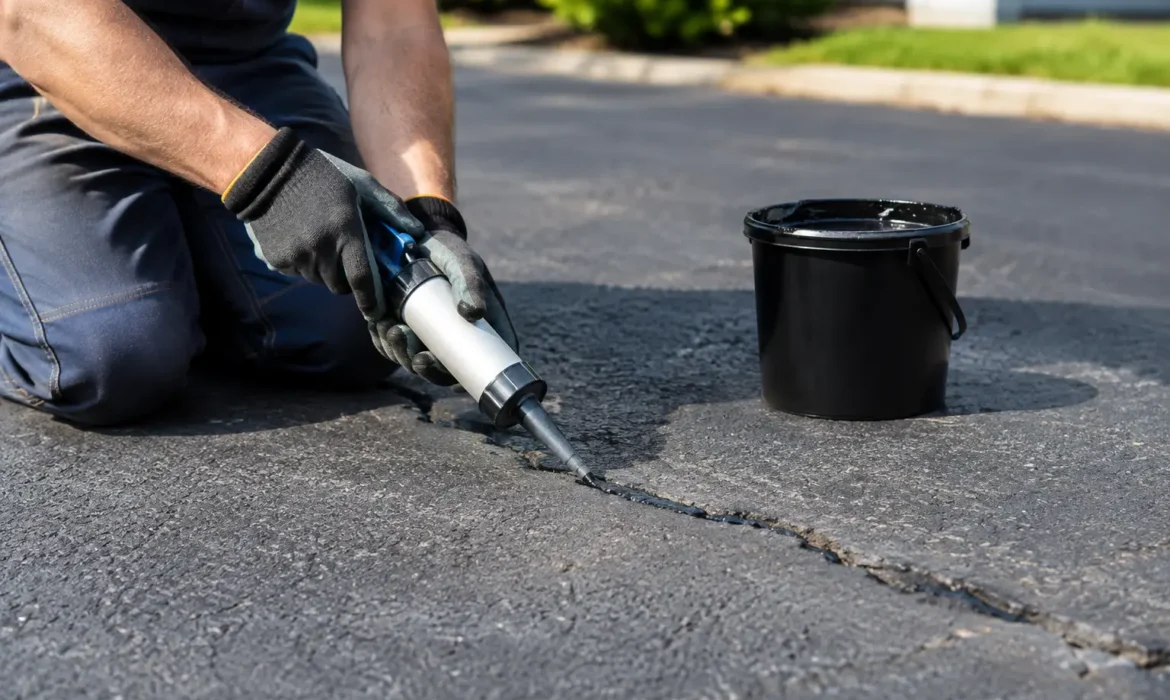
A hairline crack near the edge of a driveway can look minor on Monday and become a moisture problem by the next hard rain. Knowing how to fix asphalt cracks early helps protect the base beneath the pavement, preserve a cleaner appearance, and reduce the chance that a small repair turns into a larger paving project.
For Maryland property owners, timing matters. Repeated rain, summer heat, vehicle traffic, and winter freeze-thaw cycles all put pressure on asphalt. The right repair depends on the crack’s width, depth, pattern, and cause. A properly cleaned and filled surface crack can often be maintained effectively, but wide, crumbling, or spreading cracks may point to a deeper issue that needs professional attention.
Start by Identifying the Type of Crack
Not every asphalt crack should be repaired the same way. Before buying filler or scheduling service, look closely at the condition of the pavement around it.
A narrow, single crack is often caused by normal aging and expansion. Asphalt gradually loses flexibility as it is exposed to sun, rain, and traffic. These cracks are usually good candidates for prompt cleaning and crack filling, provided the surrounding pavement remains firm.
Cracks along the outer edges of a driveway or parking area can indicate that the pavement lacks support at the sides. Vehicles driving too close to the edge, poor drainage, or soft soil can all contribute. Filling the crack may improve the surface, but the edge support and water flow should also be addressed if the damage keeps returning.
A group of interconnected cracks that resembles alligator skin is more serious. This pattern commonly means the asphalt and its supporting base have weakened under traffic loads. Surface filler alone will not restore that area. The damaged section generally needs to be removed and rebuilt so the new asphalt has a stable foundation.
Long cracks that follow a seam between two paved sections may result from movement between those sections. These can often be sealed if the pavement is otherwise sound. However, if the seam has separated widely or the asphalt is sinking on one side, a more involved repair may be the better long-term choice.
How to Fix Asphalt Cracks With the Right Preparation
The quality of a crack repair is determined well before filler is applied. Material will not bond well to dusty, wet, loose, or crumbling asphalt. Choose a dry day and give the repair area enough time to dry after rain or cleaning.
Begin by removing leaves, dirt, gravel, and weeds from the crack. A stiff wire brush works well for stubborn debris, while a blower can clear out loose material from the crack and surrounding surface. If weeds are growing through the opening, remove the roots as thoroughly as possible. Leaving organic material behind can interfere with adhesion and allow the crack to reopen.
Next, inspect the edges. If the asphalt along the crack is loose, broken, or flaking away, remove the unstable pieces until you reach solid pavement. This step can make the crack look wider, but it gives the repair material a stable surface to hold onto.
Avoid filling cracks when rain is expected soon or when the pavement is damp. Moisture trapped beneath a repair can weaken the bond and continue working into the pavement structure. It is also wise to postpone repair during extreme heat, when asphalt is very soft, or during cold conditions, when many repair materials do not cure as intended.
Choose Filler for Narrow Cracks and Patch Material for Larger Damage
For narrow, stable cracks, a flexible asphalt crack filler is typically the appropriate choice. The goal is to seal the opening and prevent water from reaching the base. Apply the material according to its intended use, working it into the crack rather than merely coating the top.
For wider openings or cracks with missing asphalt around the edges, a patching material may be needed. Larger repairs often require building the material in layers and compacting it so the finished area sits level with the surrounding pavement. A repair that is left too high can create a bump, while one that sits too low can hold water.
Do not treat filler as a cure for every crack. If the surface has settled, feels soft under vehicles, or has widespread cracking, sealing the visible openings may only delay the next failure. In those cases, removing failed asphalt, correcting the base, and installing new pavement in the affected area provides a more durable result.
Apply the Repair Carefully
Once the crack is clean and dry, fill it steadily from the bottom up. This helps reduce air pockets and gives the material more contact with the crack walls. Use a pourable filler for tight cracks and a thicker patch material where the opening is wider or the edges are damaged.
Keep the repair close to level with the pavement. A putty knife, trowel, or squeegee can help smooth the material into the opening and feather it across the surface. The goal is a sealed repair that allows water to drain instead of collect.
Let the material cure before driving or parking on it. Cure time changes with the product type, repair depth, temperature, and humidity. Rushing traffic back onto a fresh repair can pull material out of the crack or leave tire marks in the surface.
For a commercial lot, it is especially helpful to plan repairs around lower-traffic hours. That protects the work and minimizes disruption for employees, residents, customers, or deliveries. Clear communication and a phased repair schedule can make crack maintenance much easier on an active property.
Address Water Before It Creates More Cracks
Water is often the real reason cracks grow. When water enters asphalt, it can weaken the base material below. Once that support is compromised, traffic flexes the pavement and turns small cracks into wider breaks, potholes, or depressed areas.
After a rainfall, walk the driveway or parking lot and watch where water goes. Puddles that remain for an extended period, runoff flowing toward pavement edges, and downspouts emptying directly onto asphalt deserve attention. The repair itself may be sound, but it will have a shorter life if water continues to collect around it.
Keep drainage paths clear and avoid directing concentrated runoff onto paved surfaces. For properties with recurring standing water, noticeable settling, or ongoing edge failure, a professional assessment can identify whether grading, drainage improvements, or pavement reconstruction is needed.
Know When a Professional Repair Makes More Sense
A homeowner can often handle a few narrow, isolated cracks. The decision changes when the cracking is widespread, the pavement is unstable, or the repair area sees regular vehicle traffic. Commercial parking lots, loading areas, and heavily used driveways place greater demands on every repair.
Professional paving service is a practical choice when cracks are wider than a simple filler repair can manage, when sections have sunk, or when alligator cracking is present. An experienced crew can determine whether the problem is limited to the surface or extends into the base, then recommend an approach that matches the actual condition of the pavement.
It also helps to call for an evaluation before a major maintenance treatment. Sealing over unaddressed cracks can improve appearance temporarily, but it does not correct weakened pavement underneath. Repairs should come first, followed by maintenance at the appropriate time.
Keep Repaired Asphalt in Better Condition
Crack repair works best as part of regular pavement care. Inspect driveways and parking areas at least twice each year, especially after winter and after periods of heavy rain. Remove debris, trim back vegetation along the edges, and address new cracks while they are still narrow and manageable.
Watch for changes in the surface, not just visible openings. Fading color, loose aggregate, puddling, edge crumbling, and tire depressions can all signal that asphalt needs attention. Early maintenance protects curb appeal, supports safer vehicle access, and gives property owners more control over repair scope.
A well-maintained asphalt surface does more than look better from the street. It supports the daily use of a home or business, handles changing weather with greater confidence, and shows visitors that the property is cared for. If a crack has started to spread or the pavement no longer feels solid, addressing it now is the most practical step toward a durable surface.