
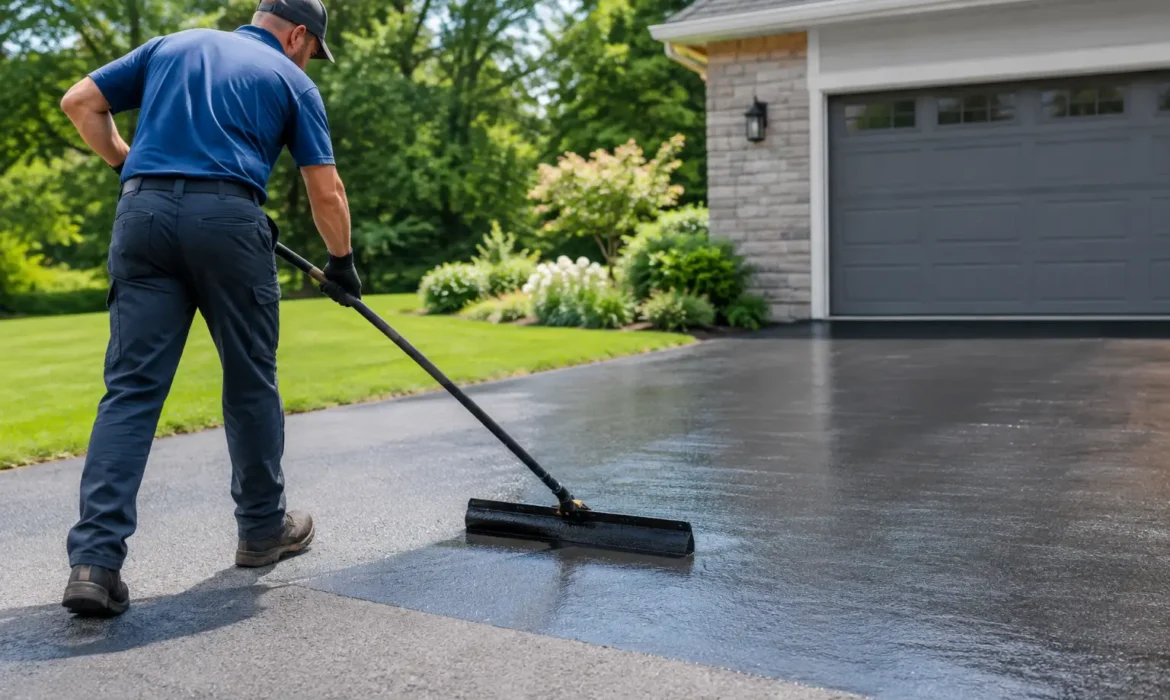
A driveway can look sound after winter but still be more vulnerable than it appears. Sunlight dries the asphalt’s binding oils, rain works into small surface openings, and vehicle traffic gradually wears away protection. Knowing when to sealcoat an asphalt driveway helps Maryland property owners protect the surface before minor wear turns into cracking, water damage, and a shorter pavement life.
Sealcoating is not a repair for failing asphalt. It is a protective maintenance step that restores a consistent dark finish while helping shield a structurally sound driveway from moisture, oxidation, road residue, and everyday vehicle use. The timing matters as much as the application itself.
When to Sealcoat Asphalt Driveway Surfaces
For most established residential driveways, sealcoating every two to three years is a practical starting point. That interval can be shorter for driveways with frequent traffic, little shade, or regular exposure to leaking vehicles. A lightly used driveway with good drainage and limited sun exposure may not need attention as often.
The calendar alone should not make the decision. Surface condition, weather, and the age of the pavement all matter. A driveway that is dull gray, slightly rough, or beginning to show fine surface wear may be ready for a protective coat even if it has not reached the typical maintenance interval.
New asphalt requires patience. Fresh pavement needs time to cure and release oils before sealcoat can properly adhere. Applying it too soon can interfere with that curing process and leave the surface with an uneven or less durable finish. In many cases, a new asphalt driveway should cure for roughly six to 12 months, depending on weather conditions, mix design, traffic, and the installer’s recommendation.
Choose Warm, Dry Weather
Sealcoating needs favorable conditions to cure correctly. In Maryland, late spring through early fall is generally the best window because temperatures are warmer and dry weather is more likely. The pavement and air should be warm enough for the material to set, and the forecast should provide sufficient dry time after application.
A cool, damp day can slow curing and affect the finished appearance. Applying sealcoat just before rain can wash material away, create streaks, or leave the coating vulnerable before it has set. Heavy dew can also create problems, especially when crews start too early in the morning.
A professional contractor watches more than the day’s high temperature. Pavement temperature, humidity, overnight conditions, shade, and the likelihood of rain all affect the work. This is one reason a dependable schedule sometimes needs flexibility. Waiting for the right weather protects the quality of the finished driveway.
Why Summer Is Not Always Automatically Best
Hot weather can be productive for sealcoating, but extreme heat has trade-offs. Asphalt can become very hot in direct sun, which may affect how quickly the coating dries and how evenly it can be applied. A qualified crew can plan around these conditions, often by scheduling work during the most suitable part of the day.
The best date is not simply the hottest date on the calendar. It is a dry period with stable temperatures and enough time for the driveway to cure before regular use resumes.
Read the Signs on Your Driveway
Your driveway often gives clear notice that maintenance is due. A faded, gray appearance is one of the first signs that oxidation is taking hold. Asphalt is naturally dark because of the binders that hold its aggregate together. As those binders dry out from sun and weather exposure, the pavement can become more brittle.
Fine surface cracks, often called hairline cracks, are another signal to inspect the driveway. Sealcoating can help protect a sound surface, but cracks should be properly cleaned and repaired first. Coating over open cracks without addressing them does not stop water from working deeper into the pavement.
Watch for these additional signs that it may be time to schedule an assessment:
- The driveway has lost its dark, even appearance and looks dry or chalky.
- Small areas are beginning to ravel, meaning loose aggregate is appearing at the surface.
- Water no longer sheds cleanly and collects in low spots after rain.
- Vehicle fluids, tire traffic, or turning areas have left visible wear patterns.
- The previous sealcoat has worn thin in the wheel paths or near the garage entrance.
Not every imperfection calls for sealcoating. Potholes, widespread cracking, soft areas, major settling, and drainage failures usually require repair or resurfacing work first. A new coat may improve color temporarily, but it cannot restore a weakened asphalt base. The right approach starts with an honest evaluation of what is happening below the surface.
Prepare the Surface Before Sealcoating
A lasting result depends on preparation. The driveway should be cleaned of dirt, leaves, loose material, and vehicle-fluid residue. Cracks need appropriate repair, and damaged sections may need patching before the protective coating is applied.
Edges deserve attention as well. When grass, soil, or mulch sits above the driveway edge, it can hold moisture against the asphalt and make it harder for water to drain away. Keeping the perimeter clear helps preserve the edge, which is one of the more vulnerable parts of an asphalt driveway.
Proper preparation also creates a more uniform finish. Sealcoat applied over debris, standing water, or untreated damage may look acceptable at first, but weak spots can become visible quickly. This is where experienced workmanship matters: the goal is not merely a darker driveway, but a clean, consistent protective layer that supports long-term performance.
Plan for Curing Time After Application
Once sealcoating is complete, the driveway needs time to cure before vehicles return. The exact time depends on the coating, temperature, humidity, shade, and traffic conditions. Foot traffic may be possible sooner, while vehicle traffic generally needs more time.
Property owners should avoid turning tires sharply, parking heavy vehicles, using kickstands, or placing heavy items on the new surface until it has properly cured. Tight turns are especially hard on fresh sealcoat because the tires can scuff or mark the coating before it fully hardens.
If possible, plan the work for a period when vehicles can be parked elsewhere. Clear communication about access before the project begins helps avoid interruptions and protects the finished surface during its most vulnerable stage.
Protect the Driveway Between Sealcoat Visits
Sealcoating is one part of a broader maintenance plan. Keeping water moving away from the driveway is equally valuable. Clean nearby drainage areas, avoid letting soil build up along the edges, and address standing water before it has repeated opportunities to seep into the pavement.
Promptly remove vehicle-fluid spills when they occur. Oils and similar fluids can soften asphalt over time, particularly in frequently used parking areas. It also helps to avoid concentrated loads at the same spot and to use caution around sharp objects, snow-clearing equipment, and heavy deliveries.
For commercial properties, high-traffic entrances, loading areas, and turning zones may need a more tailored maintenance schedule than low-use residential pavement. The same principle applies: protect sound asphalt early, and repair structural damage before coating it.
A well-timed sealcoat can preserve curb appeal, improve the driveway’s finished appearance, and add another layer of defense against Maryland’s changing weather. If the surface is fading, showing early wear, or approaching its next maintenance cycle, a professional evaluation can help determine whether sealcoating is the right next step or whether repairs should come first.