
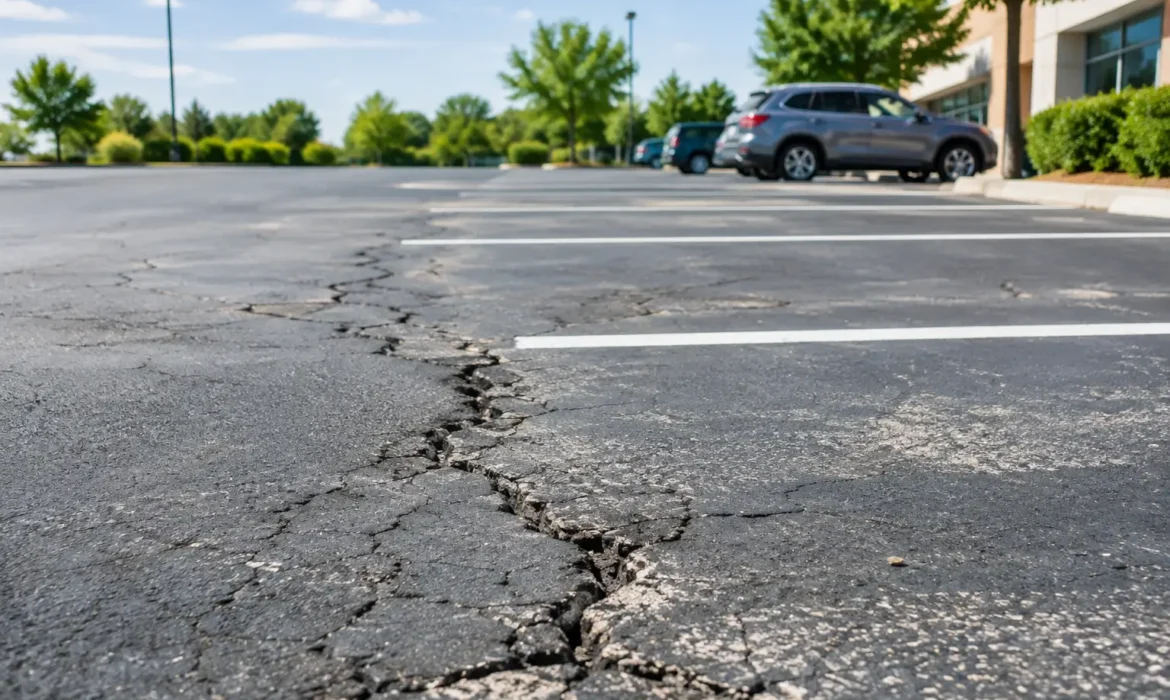
A parking lot rarely fails all at once. More often, it sends clear warnings through its surface: a crack that lengthens after winter, standing water near an entrance, loose gravel collecting along a drive lane, or faded pavement that makes an otherwise well-kept property look neglected. Knowing the signs parking lot needs resurfacing helps property owners act before small surface failures become larger repairs that disrupt traffic, safety, and curb appeal.
For commercial properties, a parking lot is part of the customer experience before anyone reaches the front door. For apartment communities, offices, medical facilities, and retail centers, it also has to perform under daily vehicle traffic, delivery activity, drainage demands, and Maryland’s changing weather. Resurfacing can restore a worn asphalt surface without requiring full reconstruction, but timing matters. The key is recognizing whether the damage is mostly at the surface or extends into the base beneath it.
1. Cracks Are Spreading Across the Surface
A few isolated cracks do not always mean a parking lot needs resurfacing immediately. Asphalt naturally expands and contracts as temperatures change, and small cracks can often be cleaned, filled, and monitored. The concern begins when cracks multiply, widen, connect, or appear throughout travel lanes and parking areas.
Long cracks that form a web-like pattern are especially worth attention. This pattern often indicates that the asphalt is losing flexibility and that the supporting structure may be experiencing stress. Water can enter those openings, weaken the material below, and accelerate deterioration during freeze-thaw cycles.
When cracking is widespread but the base remains stable, resurfacing may provide a durable reset. The existing pavement is repaired where needed, prepared properly, and covered with a new asphalt layer that improves both performance and appearance.
2. Potholes Keep Returning
Potholes are more than an inconvenience. They can create trip hazards, damage vehicles, hold water, and give visitors the impression that maintenance has been deferred. A single pothole may be a localized repair, particularly if it results from a specific impact or drainage issue. Repeated potholes across several areas tell a different story.
When potholes reappear after patching, moisture may be reaching the layers beneath the asphalt. The surface can no longer protect the base effectively, and repairs become less reliable as the surrounding pavement continues to weaken. Resurfacing may be appropriate if the underlying base can be stabilized through targeted repairs first.
If potholes are deep, extensive, or paired with soft pavement under vehicle loads, the lot may require more than a new top layer. A professional site evaluation can distinguish between an area that can be resurfaced and one that needs deeper reconstruction.
3. Water Ponds After Rainfall
Water should move off a parking lot, not remain in wheel paths, parking stalls, entrances, or along curbs after a normal rain. Puddles that linger for a day or longer can be a sign of low spots, settling, worn asphalt, or a drainage pattern that no longer works as intended.
Standing water speeds up asphalt damage. It seeps into cracks, softens pavement edges, and creates conditions that lead to potholes and surface breakdown. During colder weather, trapped water can freeze and expand, causing the damage to spread further.
Not every drainage concern calls for resurfacing across the entire lot. Sometimes a localized correction and asphalt repair will solve the problem. However, if ponding appears in multiple areas or coincides with widespread cracking and roughness, resurfacing can provide an opportunity to restore proper surface drainage while renewing the pavement.
4. The Surface Looks Gray, Dry, or Brittle
Fresh asphalt has a dark, uniform appearance. Over time, sunlight, weather, vehicle traffic, and normal aging cause the surface to fade to gray. Color alone is not a reason to resurface, but a faded lot combined with a dry, brittle texture is a meaningful warning sign.
As asphalt loses its protective oils, it becomes less flexible. That makes it more likely to crack under changing temperatures and traffic loads. In earlier stages, sealcoating can help protect a structurally sound pavement and refresh its appearance. Once the asphalt has extensive cracking, raveling, or surface loss, sealcoating will not correct the underlying problem.
This is an important trade-off for property managers. Maintenance is most cost-effective when the pavement is still sound. Resurfacing becomes the better solution when the surface has moved beyond what routine protection can reasonably preserve.
5. Loose Gravel Is Collecting Around the Lot
Raveling occurs when the asphalt binder wears away and the small stones within the pavement begin to loosen. You may notice gravel gathering near curb lines, at entrances, in parking spaces, or along the edges of drive lanes. The pavement can feel rough underfoot and look worn in high-traffic areas.
Early raveling may be limited to a few sections, especially where vehicles turn sharply, brake frequently, or where water drains poorly. But widespread loose aggregate suggests the surface is deteriorating across a larger area. As material continues to break away, the pavement thins and becomes more vulnerable to cracking and potholes.
A properly planned resurfacing project removes unstable surface material, addresses damaged areas, and installs a consistent new layer. The result is smoother travel, better visual continuity, and renewed protection for the pavement structure below.
6. Wheel Paths and Traffic Lanes Are Sinking
Depressions where vehicles repeatedly travel are a sign that the pavement is carrying more stress than it can support. You may see low areas in drive lanes, loading zones, entrances, or near dumpsters. These depressions often collect water, which makes the issue worse.
Heavy delivery vehicles, frequent traffic, and a weakened base can all contribute to sinking. Resurfacing can correct shallow surface irregularities after necessary repairs are completed. If the pavement flexes noticeably or the low areas are severe, a contractor may recommend removing and rebuilding those sections before resurfacing the surrounding lot.
The goal is not simply to make the parking lot look smooth for a season. Durable results depend on correcting the cause of the settlement so the new surface has dependable support.
7. Edges Are Crumbling or Breaking Away
Parking lot edges often fail first because they have less support than the center of the pavement. This is common near landscaped areas, curbs, drainage channels, and places where vehicles frequently drive too close to the edge. Crumbling edges can gradually spread inward, reducing usable parking space and creating uneven transitions.
Localized edge repair may be enough when the rest of the lot is in good condition. When edge failures occur alongside cracking, raveling, and faded asphalt, they are another indicator that the surface is nearing the end of its useful service life. Resurfacing after proper edge repair can restore a cleaner, more durable perimeter.
8. Previous Repairs Are Everywhere
Patches are useful when they are targeted and structurally sound. A parking lot with a few well-repaired areas can continue to perform well for years. But when patches cover many sections, sit at different heights, or begin to crack around their borders, the lot can become difficult to maintain effectively.
A heavily patched surface often produces a bumpy ride and an inconsistent appearance. It may also signal that damage is no longer isolated. Resurfacing creates a more uniform driving surface while allowing damaged areas to be repaired before the new asphalt is placed.
9. The Lot No Longer Supports Your Property’s Image
Parking lots are working surfaces, but they are also highly visible property assets. Faded pavement, broken edges, potholes, and poorly defined traffic areas can undermine an otherwise attractive building or storefront. Visitors may not know why the property feels less maintained, but they notice the condition of the surface.
Resurfacing can improve the overall presentation of a site while creating a smoother foundation for fresh striping and clearer traffic organization. For businesses and property managers, this can be especially valuable before a busy season, tenant turnover, property improvements, or a planned reopening.
When Resurfacing Is the Right Next Step
The best time to resurface depends on the condition of the parking lot, not just its age. A lot with surface-level wear, moderate cracking, and a generally stable base is often a strong candidate. A lot with deep failures, major settlement, or extensive moisture damage may need more involved repairs in specific areas before resurfacing can deliver lasting value.
An experienced contractor should inspect drainage, traffic patterns, pavement thickness, edge condition, and the condition of previous repairs before recommending a scope of work. This approach helps avoid applying a new surface over problems that will quickly return.
A well-timed resurfacing project protects more than asphalt. It supports safer movement, smoother access, stronger curb appeal, and a more dependable first impression for everyone who uses the property. If your parking lot is showing several of these signs, a professional evaluation can turn uncertainty into a clear maintenance plan before minor wear becomes a larger interruption.