
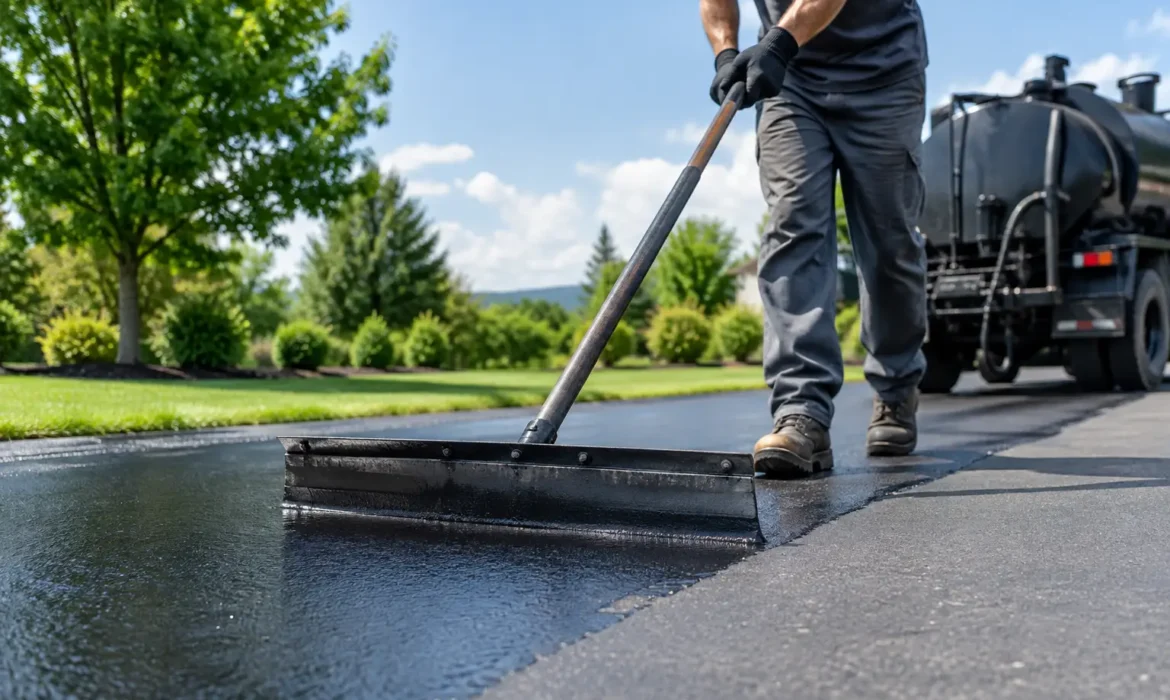
A driveway or parking lot rarely fails all at once. It starts with a faded surface, a few small cracks, and areas that seem to hold water longer after a storm. Professional sealcoating services help slow that progression by protecting asphalt from the daily exposure that causes it to dry, weaken, and lose its finished appearance.
For Maryland property owners, timing matters. Rain, summer heat, winter moisture, vehicle traffic, and changing temperatures all work against an asphalt surface. A properly planned maintenance program gives homeowners and commercial property managers a practical way to preserve a valuable exterior asset before larger repairs become necessary.
What Sealcoating Does for Asphalt Surfaces
Asphalt is durable, but it is not maintenance-free. Its dark, flexible surface contains binders that can gradually break down when exposed to sunlight, water, vehicle fluids, and regular traffic. As that happens, the pavement may turn gray, become more brittle, and develop openings where moisture can reach the base beneath it.
Sealcoating applies a protective coating over sound asphalt. The coating renews the deep, uniform appearance of the surface while creating a barrier against common sources of wear. It is not designed to rebuild failed pavement or correct major drainage issues. Its value comes from preserving asphalt that is still structurally serviceable.
That distinction is important. Applying sealer over widespread cracking, soft spots, or surface deterioration may improve the color temporarily, but it will not correct the underlying condition. An experienced contractor evaluates the pavement first, completes needed preparation and crack repair, and recommends the right approach for the surface in front of them.
Why Professional Sealcoating Services Are Worth It
The visible improvement is often what owners notice first. A freshly sealcoated driveway looks cleaner and more defined, while a well-maintained parking lot creates a stronger first impression for customers, tenants, visitors, and employees. But the long-term protection is the larger benefit.
A quality sealcoat helps limit water penetration through the pavement surface. Water is one of asphalt’s most persistent enemies because it can move into cracks, affect the material below, and contribute to further damage during temperature swings. A protective coating also helps reduce oxidation from the sun, which can leave asphalt dry and faded over time.
For commercial properties, appearance and maintenance planning go together. A dark, even pavement surface makes markings easier to see when they are refreshed and helps the property look actively maintained. For homeowners, sealcoating can restore curb appeal without the disruption of a full driveway replacement.
The result depends on the pavement’s existing condition, the preparation completed beforehand, the material selected, and weather conditions during application. Professional work is not simply a matter of spreading a black coating across the surface. It is a maintenance process that requires judgment at every stage.
The Right Time to Sealcoat a Driveway or Parking Lot
There is no single calendar date that works for every property. Surface condition, traffic level, drainage, shade, and the age of the asphalt all influence the appropriate schedule. In general, sealcoating is most effective when asphalt is showing early signs of weathering but remains fundamentally sound.
Watch for a dull gray color, loss of the original dark finish, fine surface cracks, or areas that seem more exposed to water and traffic. These are useful signals to arrange an inspection. Waiting until the pavement has extensive cracking, loose material, deep depressions, or recurring standing water can limit what sealcoating alone can accomplish.
New asphalt also needs time to cure before it receives a protective coating. The right timing depends on the installation and site conditions, so it is best determined through a professional assessment rather than a fixed rule. Applying sealer too soon can interfere with the asphalt’s natural curing process.
For busy commercial locations, scheduling is just as important as surface condition. Work may be planned in sections or during lower-traffic periods to help keep entrances, parking areas, and vehicle circulation as functional as possible. Clear communication before work begins helps property managers prepare tenants, staff, and visitors for temporary access changes.
What a Proper Sealcoating Process Includes
The quality of preparation has a direct effect on how the finished coating performs. Before sealcoating begins, the pavement should be inspected for cracks, damaged areas, drainage concerns, and contamination from oil or other substances. Any necessary repairs need to be addressed first so the surface is ready for protection.
A professional process generally includes several connected steps:
- Cleaning dirt, leaves, loose debris, and surface buildup from the asphalt
- Treating stains or problem areas that could prevent proper adhesion
- Filling and repairing cracks so water has fewer pathways into the pavement
- Applying an even coat with attention to edges, transitions, and high-use areas
- Allowing adequate drying time before vehicles return to the surface
Each step serves a purpose. If debris remains on the asphalt, the coating may not bond evenly. If cracks are ignored, moisture can continue working below the surface. If traffic returns too early, tires can mark or damage a coating that has not had sufficient time to set.
This is why experienced crews pay attention to weather forecasts, pavement temperature, site access, and drying conditions. A dependable result requires more than the right materials. It requires disciplined preparation and a schedule that respects the condition of the surface.
Sealcoating for Homes and Commercial Properties
Residential and commercial asphalt face different patterns of wear. A home driveway may deal with daily family vehicles, delivery traffic, shaded areas, and runoff from landscaping. The goal is often to protect the driveway, improve curb appeal, and keep the entrance looking cared for.
Commercial parking lots have broader demands. They may handle steady traffic, turning vehicles, loading activity, and higher wear near entrances or drive lanes. Property managers also need a contractor who can coordinate the project carefully, communicate clearly, and complete the work with minimal disruption to normal operations.
In both settings, drainage deserves attention. Sealcoating helps protect the pavement surface, but it cannot solve water that consistently pools in the same location. Depressions, damaged edges, or failing areas may need separate repairs to support the life of the asphalt and the new coating.
How to Protect the Results After Sealcoating
Once the surface is ready for use, a few practical habits can help preserve it. Avoid allowing heavy equipment to sit in one place for extended periods, especially during hot weather when asphalt is more flexible. Address fluid leaks promptly, because petroleum-based spills can soften asphalt and stain the protective coating.
Keep an eye on new cracks and areas where water collects after rain. Early attention is usually simpler than waiting for a small opening to become a larger repair. Seasonal inspections are particularly useful for parking lots and driveways that see frequent traffic or have mature trees nearby.
A professional maintenance plan should fit the property rather than follow a one-size-fits-all schedule. A lightly used residential driveway may have different needs than a retail parking area, apartment community, office entrance, or industrial access lane. The best recommendation begins with an honest evaluation of pavement condition and how the space is used.
All Star Contracting Services helps Maryland homeowners and commercial property owners protect asphalt surfaces with careful preparation, quality materials, and service focused on lasting results. If your driveway or parking lot is beginning to look faded, worn, or vulnerable to moisture, a timely assessment can help you make the next maintenance decision with confidence.