
A concrete surface can look finished in a day, but its real performance is decided long before the final pass of the trowel. Experienced concrete contractors know that a driveway, patio, walkway, or commercial entrance must be built for the soil beneath it, the water around it, the traffic above it, and Maryland’s changing seasons. The visible finish matters, but it is only one part of a lasting installation.
For homeowners and property managers, choosing the right contractor means looking beyond a quick estimate or a promising completion date. The right team brings a clear plan, prepares the site carefully, uses suitable materials, and communicates what will happen at each stage. That approach protects both the appearance and the working life of the finished surface.
What Concrete Contractors Should Evaluate First
Every successful concrete project starts with the site. Before placement begins, the contractor should consider the surface’s purpose, expected load, existing conditions, grade, and drainage path. A decorative patio has different needs than a driveway carrying multiple vehicles each day. A commercial walkway has different priorities than a loading area or parking-lot apron.
The existing ground is especially important. Soft soil, unstable fill, tree roots, poor drainage, or a failing older surface can all affect the new work. Pouring concrete over an unprepared base may save time initially, but it can lead to settlement, cracking, or uneven areas later. Good preparation creates a stable foundation so the slab can perform as intended.
Water deserves the same attention. Concrete is durable, but standing water and repeated freeze-thaw cycles can shorten the life of a surface when drainage is ignored. Proper grading moves water away from structures and helps prevent puddling, erosion at edges, and slippery walking conditions. On a residential property, this can protect a driveway or patio investment. At a commercial property, it also supports cleaner, safer access for visitors and employees.
The Work Beneath the Concrete Matters Most
A finished slab is only as dependable as the support beneath it. The process typically begins with removing unsuitable material and shaping the area to the required grade. The contractor then installs and compacts a stable base appropriate for the project. Compaction is not a minor detail. It helps reduce shifting and creates even support across the surface.
Forms are set next to establish the shape, elevation, and edges of the concrete. This is where accuracy matters. A slightly incorrect slope may not be obvious at first, but it can direct water toward a building, create low spots, or leave transitions that feel awkward underfoot or under tires.
Reinforcement may be used where the project calls for additional support. Its role is to help the slab handle stress and manage movement, not to compensate for poor excavation or an inadequate base. Quality work combines the right base, thickness, reinforcement approach, and placement techniques rather than relying on any one element alone.
This is also why two projects that look similar on paper may require different scopes of work. Replacing a small walkway on firm, well-drained ground is not the same as rebuilding a cracked driveway with drainage concerns. A dependable contractor explains those differences clearly instead of treating every concrete job as a standard pour.
Placement and Finishing Are More Than Appearance
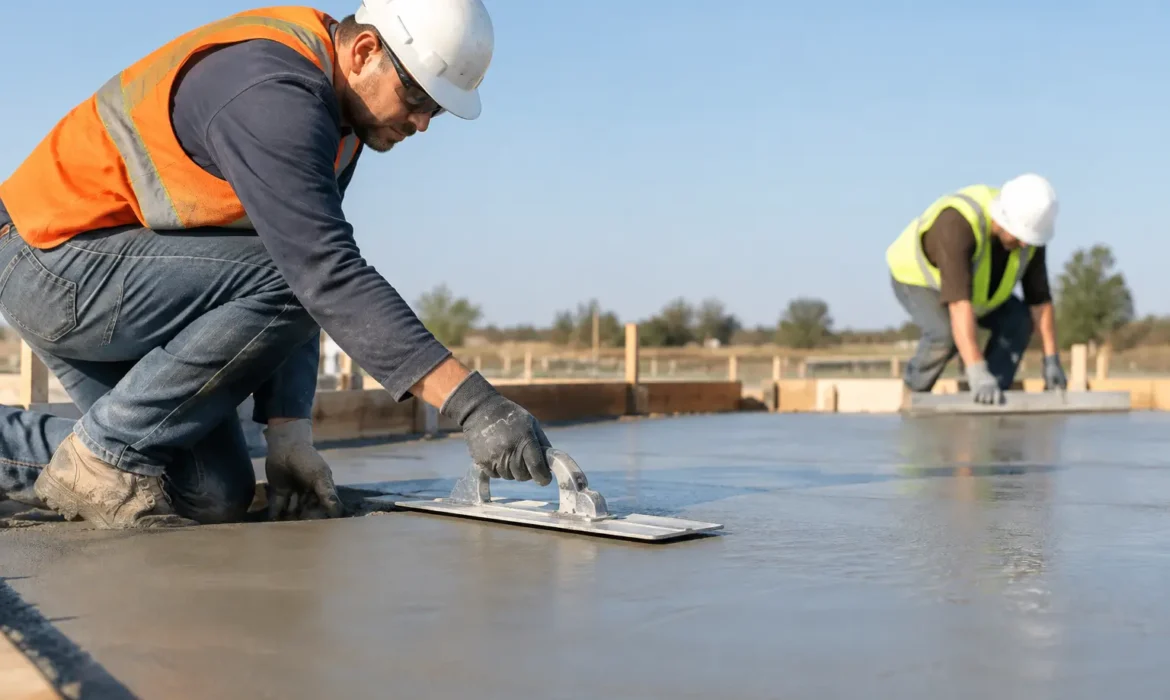
Once concrete arrives, the crew works against the clock. The material must be placed, spread, leveled, and finished while conditions are right. Temperature, sun exposure, wind, humidity, and the size of the pour all affect the timing. Skilled crews adjust their process to the job rather than rushing through a finish that will not hold up.
The final texture should match how the surface will be used. A smooth decorative finish may suit certain covered or low-traffic spaces, while a broom finish provides useful traction for driveways, sidewalks, and exterior entries. Stamped concrete can create the character of stone, brick, or other patterned surfaces while retaining the practical benefits of concrete. It is a strong option for patios, pool surrounds, and entrance areas when visual impact is a priority.
Decorative work comes with a trade-off: it requires close attention to color consistency, pattern alignment, edge detailing, and long-term maintenance. It can transform an outdoor living area, but it should be selected with the location and expected use in mind. A surface that receives heavy vehicle traffic needs a different design conversation than a patio designed for entertaining.
Why Joints and Curing Protect the Investment
Concrete naturally changes as it hardens. Control joints create planned locations for movement, helping guide cracking to less noticeable areas. They are a normal and necessary part of a well-built slab, not evidence that a surface was poorly installed. Their placement should be planned around the slab’s shape, dimensions, corners, and transitions.
Curing is just as important. Fresh concrete needs time and appropriate moisture conditions to develop strength. Walking, driving, placing furniture, or exposing the surface to heavy use too soon can damage the finish or compromise performance. A professional contractor provides practical guidance about when the new surface can safely be used and what should be avoided during the early curing period.
Weather can affect scheduling, particularly in Maryland. Very hot days, cold conditions, rain, and rapid temperature shifts all influence concrete placement and curing. A disciplined schedule is not simply about finishing quickly. It is about choosing the right working window and protecting the quality of the installation. If conditions require an adjustment, clear communication is far more valuable than a rushed pour.
How to Compare Concrete Contractors With Confidence
When evaluating concrete contractors, start with the conversation. A qualified contractor should ask how the surface will be used, inspect site conditions, discuss drainage, and explain the proposed scope in plain language. You should understand what will be removed, how the base will be prepared, what finish is planned, and how the work area will be protected during construction.
Pay attention to whether the estimate is specific. A vague proposal can make it difficult to compare options or know what is included. A clear scope gives property owners a better picture of the process, expected timeline, surface design, and cleanup responsibilities. It also helps prevent misunderstandings once work is underway.
For commercial properties, coordination matters as much as craftsmanship. Contractors should understand that entrances, parking areas, walkways, and delivery routes affect daily operations. A thoughtful plan may phase the work, maintain practical access where possible, and communicate timing so tenants, staff, and visitors are not caught off guard.
For homeowners, the key questions are often about disruption and finish quality. Will the crew protect nearby landscaping? How will the driveway or access area be handled while work is in progress? What finish best fits the home’s exterior? A customer-centered contractor takes those concerns seriously because a construction project should improve the property without creating unnecessary confusion.
Caring for a New Concrete Surface
Concrete is low-maintenance, not no-maintenance. Regular cleaning removes dirt, leaves, automotive fluids, and materials that can stain or hold moisture against the surface. Keep drainage paths clear, especially near driveways, patios, and walkways. If water begins pooling where it did not before, address the issue early rather than waiting for surface deterioration.
Avoid using sharp metal tools aggressively on concrete during winter cleanup, as they can chip edges or damage the finish. When selecting deicing products, follow the guidance provided for the particular surface and avoid using materials that may be harsh on young or decorative concrete. Furniture, planters, and equipment should be moved carefully rather than dragged across finished surfaces.
Small changes can also help extend service life. Keep heavy loads away from unsupported slab edges, monitor joints for debris, and watch for signs of settlement near adjacent landscaping or drainage areas. Early attention is usually simpler than waiting for a minor condition to become a larger repair.
A concrete project should deliver more than a clean new surface. It should give your property dependable access, better curb appeal, and a space built to serve its purpose season after season. The best next step is a site-focused conversation with a contractor who will look closely, explain the options clearly, and build the work around how you actually use your property.