
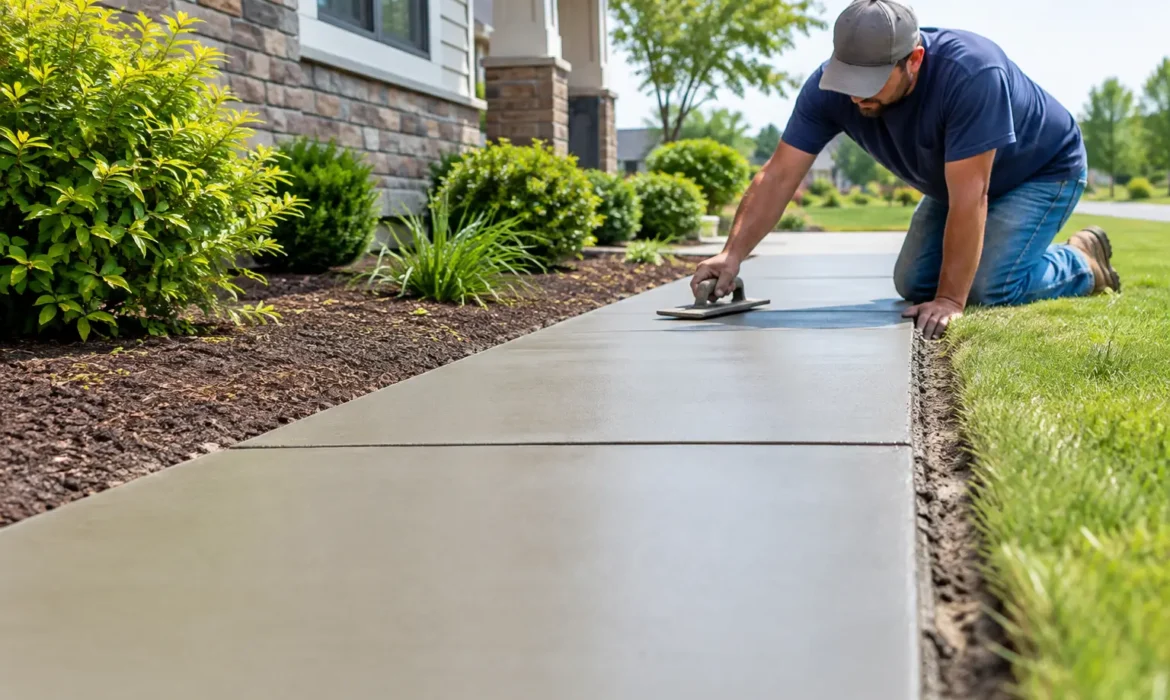
A cracked, uneven sidewalk changes how people experience a property before they ever reach the front door. It can collect water, create a tripping concern, interrupt foot traffic, and make an otherwise well-maintained home or business look neglected. Professional concrete sidewalk installation solves those problems by creating a stable, clean-looking walking surface built for daily use and Maryland’s changing weather.
The finished concrete is what people see, but the long-term performance of a sidewalk is determined below the surface. Site preparation, drainage planning, base compaction, joint placement, and proper curing all affect whether a new walkway stays level and attractive over time. That is why a sidewalk project deserves more than a quick pour.
Start With the Purpose of the Walkway
Every sidewalk should have a clear job. A residential path may connect a driveway to a front entry, lead around the side of a home, or provide a safer route to a patio or backyard. On a commercial property, it may guide visitors from parking areas to entrances, connect buildings, or improve circulation around a busy site.
That purpose shapes the layout. A narrow path can work well where foot traffic is light and space is limited, while a broader walkway feels more comfortable near main entries and in areas where people may walk side by side. The route should feel natural, not like an obstacle course around landscaping, parked vehicles, utility features, or drainage areas.
Slope deserves close attention from the beginning. A sidewalk needs enough pitch to move water away from the walking surface, yet it should remain comfortable and secure underfoot. Poor grading can leave puddles along the path, send water toward a foundation, or create low spots that become slippery during colder weather. The right approach depends on the property’s existing elevations, soil conditions, and where water naturally travels during a heavy rain.
What Proper Concrete Sidewalk Installation Involves
A dependable sidewalk is built in stages, and each stage supports the one that follows. Rushing the early work often leads to the failures property owners notice years later, including settling, cracking, edge breakdown, and standing water.
Removal and Excavation Set the Foundation
When replacing an old walkway, damaged concrete and unstable material must be removed before new work begins. Simply placing new concrete over a failing surface may appear convenient, but it does not correct the underlying movement that caused the old problems.
The installation area is excavated to create room for the base and the new concrete. Depth varies according to site conditions and the intended use of the walkway. A pedestrian path does not face the same demands as a surface that may occasionally carry equipment or service traffic, so the construction plan should match the real conditions on site.
Tree roots, soft ground, hidden debris, and drainage issues can affect this stage. Addressing them before concrete is placed protects the investment and helps prevent avoidable repairs later.
A Compacted Base Helps Prevent Movement
Concrete is strong in compression, but it still depends on stable support below. A properly prepared aggregate base distributes weight and reduces the risk of uneven settling. It also helps manage moisture beneath the slab.
The base material is installed in controlled layers and compacted thoroughly. This is not the most visible part of the project, but it is one of the most valuable. A sidewalk that looks excellent on installation day can still shift or crack prematurely if the ground underneath was not properly prepared.
Maryland properties can have varying soil conditions even within the same neighborhood. Areas near mature landscaping, downspouts, retaining walls, or previous excavation may require special attention. An experienced contractor evaluates these details rather than applying the same approach to every yard or commercial site.
Forms Create Straight Lines and Consistent Grades
Forms establish the walkway’s shape, width, and elevation before the concrete arrives. Clean formwork makes a noticeable difference at transitions to driveways, stairs, porches, curbs, and existing pavement. It also helps maintain the intended drainage direction across the full length of the path.
For curved walkways, careful form placement creates an inviting route without awkward bends. For straight paths, accurate alignment keeps the surface looking intentional and professional. These details matter for curb appeal, but they also make the walkway easier to use and maintain.
Concrete Placement Is Only Part of the Job
Once the site is ready, concrete is placed, leveled, consolidated, and finished to the desired texture. For most sidewalks, a broom finish is a practical choice because it provides traction without creating a rough, uncomfortable surface. Around entryways and outdoor living spaces, decorative finish options can add visual interest when they suit the property’s overall design.
Thickness and reinforcement should be selected based on the location and expected conditions. A simple pedestrian walkway has different needs than a path near a dumpster enclosure, loading area, or service entrance. The goal is not to overbuild every slab. It is to build the right slab for the work it must perform.
Joints Control Cracking, Not Whether It Happens
Concrete naturally expands, contracts, and develops shrinkage stress as it cures. Joints provide planned locations for that movement, helping cracks form in controlled, less noticeable lines rather than randomly across the finished surface.
Expansion joints are also used where a sidewalk meets fixed structures or other concrete surfaces. These transitions need room for movement. Thoughtful joint placement improves both appearance and durability, especially on longer walks exposed to sun, rain, and seasonal temperature changes.
No contractor can promise that concrete will never crack. What skilled installation can do is reduce the likelihood of significant, uncontrolled cracking by preparing the base correctly, using appropriate jointing, and allowing the material to cure under suitable conditions.
Drainage Is a Sidewalk Issue, Not Just a Landscape Issue
Water is one of the most common reasons outdoor concrete deteriorates early. If runoff repeatedly flows beneath a sidewalk, it can erode supporting soil and create voids under the slab. If water sits on top of the concrete, it can stain the surface, encourage algae growth, and contribute to surface wear through freeze-thaw cycles.
Before installation, consider nearby roof runoff, downspout outlets, driveway drainage, grading, and low areas in the yard or parking area. A sidewalk should direct water away from structures and avoid blocking the property’s natural drainage path.
In some situations, the best answer is a modest adjustment to the route or grade. In others, drainage improvements should be completed before the sidewalk is installed. Solving water issues first is usually far more effective than trying to correct them after a new slab begins to move.
Choosing a Finish That Works for the Property
A sidewalk should complement the property, but visual appeal should not outweigh performance. A classic broom-finished surface is durable, easy to maintain, and appropriate for most homes, apartment communities, offices, retail locations, and industrial properties. It offers a clean appearance that works with almost any exterior style.
Decorative concrete may be a good fit near a front entry, patio, pool area, or highly visible business entrance. Color, patterns, borders, and stamped finishes can create a more distinctive appearance. The trade-off is that decorative surfaces may require more thoughtful maintenance and should be selected with traction, surrounding materials, and long-term appearance in mind.
For commercial properties, consistency is often the priority. Matching the color, finish, and alignment of existing concrete can help the entire site look organized and well cared for. For homeowners, a new walkway can be an opportunity to tie together a driveway, porch, landscape beds, and outdoor living areas.
Protect the New Sidewalk During Curing
Concrete gains strength over time. The first days after placement are especially important, and the surface should be protected from premature traffic, heavy loads, and unnecessary disturbance. Weather conditions can also influence the curing process, which is why scheduling and jobsite protection matter.
After the walkway is ready for normal use, regular care is straightforward. Keep soil and mulch from building up along the edges, direct runoff away from the slab, and clean away leaves or debris that hold moisture against the surface. Avoid harsh deicing materials that can damage concrete during winter conditions. If small cracks or joint deterioration appear over time, early attention can help prevent a minor issue from becoming a larger repair.
When Replacement Makes More Sense Than Repair
Not every imperfect sidewalk needs to be replaced. Small cosmetic cracks, isolated stains, or minor surface wear may be manageable with targeted maintenance. However, replacement is often the more reliable solution when slabs have settled unevenly, large sections are broken, edges are crumbling, drainage has undermined the base, or repeated repairs have failed to restore a safe walking surface.
A professional site review helps determine whether the issue is limited to one section or reflects a larger base or drainage problem. That distinction matters. Replacing only the visible damaged area without correcting the cause can lead to another failure nearby.
A well-built sidewalk is a practical improvement that pays off every day through safer access, better drainage, and a more polished property appearance. For property owners who want clear communication and durable exterior work, All Star Contracting Services can assess the site, explain the right approach, and help turn an overlooked path into a dependable part of the property.