
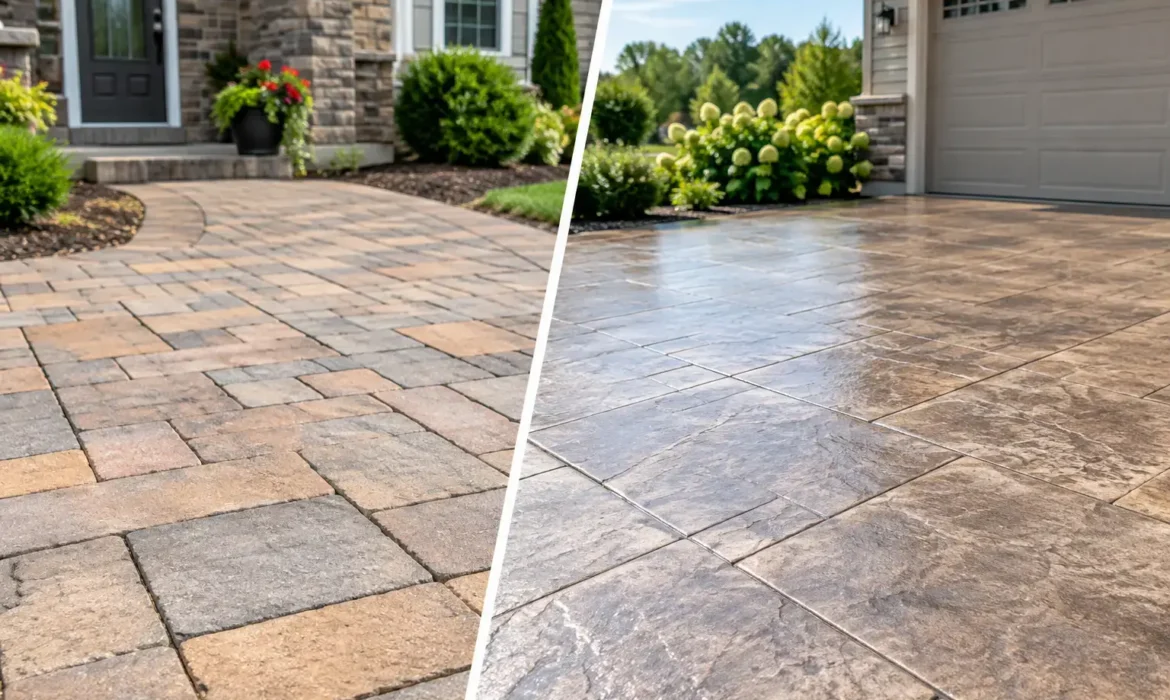
A new patio, walkway, or driveway should do more than look finished on installation day. It needs to handle foot traffic, vehicles, rain, seasonal temperature changes, and the daily use that makes an outdoor surface worthwhile. When homeowners compare pavers versus stamped concrete, the better choice depends on the space, the desired appearance, and how the surface needs to perform over time.
Both materials can create a polished, inviting exterior. Pavers offer individual units and visible joint lines that bring texture and flexibility to a design. Stamped concrete creates the appearance of stone, brick, slate, or other patterns in a continuous concrete surface. The right material is rarely about choosing the trendiest look. It is about matching the installation to the property.
Pavers Versus Stamped Concrete: The Core Difference
Pavers are individual manufactured or natural units installed over a prepared base. The pieces interlock, and joint material helps hold the surface together while allowing water to move through the joints. Their modular design is one of their greatest practical advantages. If a small area is disturbed or damaged, the affected units can often be lifted, the base corrected, and the pavers reset.
Stamped concrete begins as a poured concrete slab. While the concrete is still workable, crews use pattern mats and coloring techniques to create a decorative finish. The result can provide the visual character of more expensive-looking materials while retaining the clean, unified appearance of a concrete surface.
Neither is automatically better. A broad entertaining patio may benefit from the continuous look of stamped concrete. A walkway around landscaping, a pool surround, or an area where future access to underground utilities is possible may favor the repair flexibility of pavers.
Appearance and Design Flexibility
Stamped concrete can create a dramatic transformation with fewer visible interruptions across the surface. It works especially well when a property owner wants a flowing patio design, a textured front entry, or a decorative sidewalk that feels cohesive with the home’s exterior. Pattern selection, color variation, borders, and layout all influence whether the finished surface looks subtle and classic or more pronounced.
Pavers create a different kind of visual appeal. Their pattern is built into the installation, not applied to the top of a slab. Running bond, herringbone, basketweave, and linear layouts can shape the character of the space. Pavers also make it easier to blend colors, define borders, or create transitions between a driveway, walkway, and patio.
For a traditional home, pavers can add warmth and established character. For a modern property, large-format pavers or clean-lined stamped patterns can feel more tailored. The most successful choice considers the home, surrounding hardscape, landscaping, and how people will move through the area.
Consider Scale Before Choosing a Pattern
A bold stamp pattern that looks appealing in a small sample can feel busy across a large patio. In the same way, a small paver layout may look overly detailed on a wide driveway. Surface size matters. A professional layout should make the property feel more organized, not visually crowded.
Durability in Maryland Weather
Maryland exterior surfaces face real seasonal demands. Moisture, heat, cold, freezing conditions, and repeated use can all affect long-term performance. The material matters, but proper site preparation and installation matter just as much.
A stamped concrete surface relies on a well-prepared base, appropriate concrete placement, proper finishing, and correctly planned control joints. Concrete naturally moves as conditions change. Those joints help manage where movement occurs, but they do not make a decorative slab immune to cracking. When cracks develop in stamped concrete, they can be more visible because they interrupt the color and pattern of the surface.
Pavers handle movement differently. Their segmented construction allows small shifts to occur across joints rather than concentrating all movement in one slab. This makes them well suited to locations where seasonal ground movement is a concern. However, pavers still require a carefully compacted base and reliable edge restraint. Without those fundamentals, they can settle, spread, or become uneven.
For either option, drainage should be addressed before installation begins. Water that stands against a home, collects near a driveway edge, or saturates the base beneath a surface can shorten the life of the work. A durable finished surface begins below grade.
Maintenance and Repairs
Maintenance is where the practical differences between pavers and stamped concrete become more noticeable.
Stamped concrete benefits from periodic cleaning and resealing to help protect color and surface finish. Resealing can also refresh its appearance after years of weather exposure. Areas exposed to deicing materials, vehicle fluids, heavy furniture, or frequent traffic may need closer attention. Surface wear may show first on high-use paths and edges.
Pavers may need occasional joint material replenishment, especially after heavy rain, cleaning, or years of use. Weeds can emerge in joints if routine upkeep is neglected, although proper joint fill and regular maintenance help reduce that issue. Individual pavers can also stain, chip, or shift, but localized repairs are generally more straightforward than repairing a decorative concrete slab.
If access beneath the surface may be needed in the future, pavers offer a clear advantage. Sections can be removed and reinstalled with less disruption to the surrounding area. With stamped concrete, accessing the area usually requires cutting and repairing the slab, which can make it difficult to match the original pattern and color exactly.
Traction, Comfort, and Everyday Use
A surface should be selected for how it feels underfoot as well as how it looks from the street. This is especially relevant for patios, entry paths, pool areas, and commercial walkways.
Stamped concrete can be finished with texture that improves traction while preserving the chosen pattern. Still, the degree of texture should fit the location. A smoother decorative finish may be suitable for a low-traffic patio, while a more textured surface may make sense near entrances or areas exposed to frequent moisture.
Pavers naturally provide joint lines and surface texture that can improve footing. Their texture can be an advantage around outdoor living areas, although the specific paver profile and installation quality remain important. Uneven pavers, wide joints, or poor transitions can become trip concerns, which is why precise grading and compaction should never be treated as secondary details.
For driveways, consider vehicle use and turning movement. Some paver patterns are better suited to resisting the forces created by tires turning in place. A stamped concrete driveway needs suitable slab thickness, reinforcement planning, joint placement, and a stable base to support regular vehicle traffic. Decorative finishes do not replace structural preparation.
Which Surface Fits Your Project?
Stamped concrete is often a strong fit when the goal is a continuous decorative surface with a custom pattern and a clean, unified presentation. It can work beautifully for patios, front walks, and carefully planned driveways where the subgrade is stable and the property owner is prepared to maintain the finish.
Pavers are often the better fit when repair access, visual texture, drainage through joints, or long-term flexibility are major priorities. They are particularly appealing for walkways, outdoor living areas, driveways, and projects where borders or changing elevations are part of the design.
The intended use should lead the decision. A quiet backyard patio does not face the same demands as a driveway serving multiple vehicles. A commercial entrance needs a different level of planning than a garden path. Slopes, drainage patterns, soil conditions, existing surfaces, and the relationship to nearby structures all deserve review before a material is selected.
Start With the Ground, Not the Finish
The most attractive pattern cannot compensate for poor preparation. Whether the project uses pavers or stamped concrete, the work should begin with a close look at grading, drainage, base conditions, traffic demands, and the way the new surface connects to the rest of the property.
For Maryland homeowners and property managers, a thoughtful on-site evaluation can turn a difficult material choice into a clear plan. Choose the surface that supports how the space will be used, then make sure the installation is built to keep serving the property long after the first impression.