
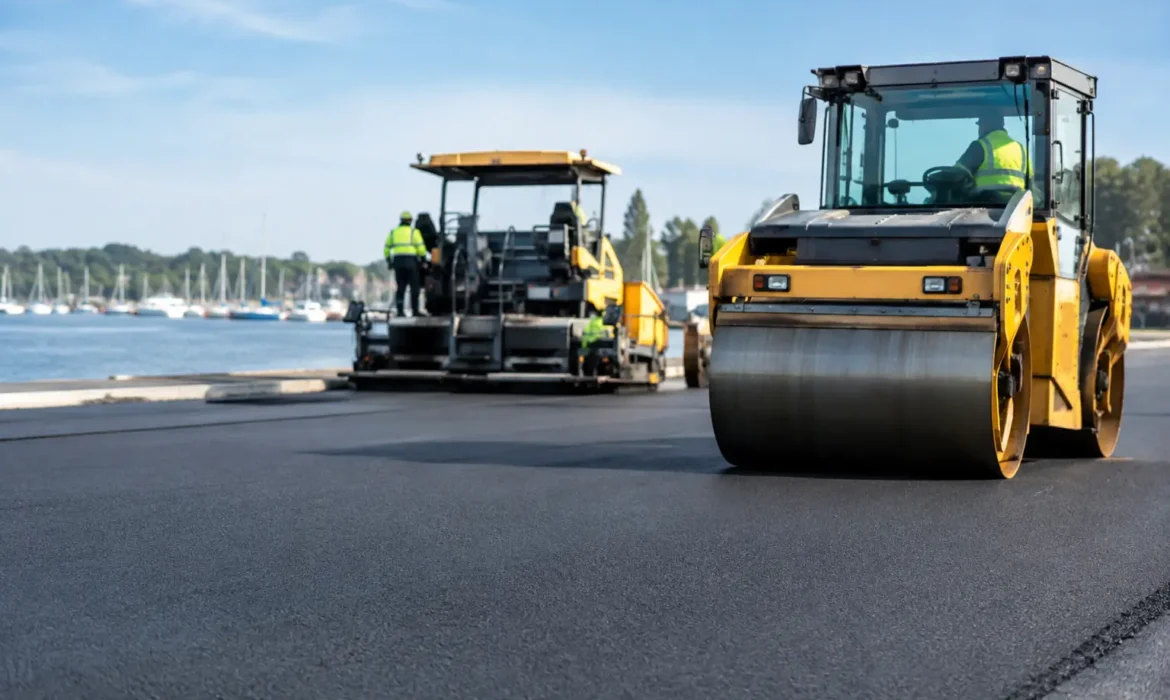
A parking lot rarely fails all at once. It starts with faded striping, small cracks near drive lanes, water settling after a storm, and rough patches that make every arrival feel less cared for. Annapolis lot resurfacing gives property owners a practical way to renew a worn asphalt surface before widespread deterioration turns a manageable project into a full reconstruction.
For retail properties, offices, multifamily communities, medical facilities, and other active sites, the goal is more than a darker parking lot. The right resurfacing plan restores a smoother driving surface, improves the property’s appearance, addresses surface-level wear, and helps the lot stand up to continued vehicle traffic and changing Maryland weather.
Is Annapolis Lot Resurfacing the Right Fix?
Resurfacing, sometimes called an asphalt overlay, involves preparing the existing pavement and installing a new layer of asphalt over a stable base. It is a strong option when the lot’s underlying structure remains sound but the upper surface has become worn, cracked, uneven, or weathered.
That distinction matters. New asphalt can improve the appearance and performance of an aging lot, but it cannot solve a serious base failure by itself. If the pavement has major depressions, extensive alligator cracking, repeated potholes, or drainage problems that have weakened the foundation, targeted repairs or reconstruction may be the more durable answer.
A professional site evaluation helps determine where the existing lot can support an overlay and where deeper work is necessary. This approach prevents a property owner from paying for a surface improvement that will not hold up under daily use.
Signs an Overlay May Make Sense
An overlay is often worth considering when cracking is present but contained, the lot has lost its smooth finish, or the surface is beginning to look tired despite having a generally stable profile. Light raveling, faded areas, and minor surface irregularities can also point toward resurfacing rather than replacement.
Pay close attention to how water moves across the lot. Standing water around entrances, drive lanes, or parking spaces may signal low areas that should be corrected during preparation. Surface drainage should be considered before new asphalt is placed, not after the work is complete.
The condition of curbs, sidewalks, catch basins, and adjacent concrete also influences the plan. A resurfaced lot should connect cleanly with surrounding features, maintaining safe transitions for drivers and pedestrians.
What a Quality Resurfacing Project Includes
A lasting result begins well before fresh asphalt arrives on site. The preparation work determines whether the new surface performs as intended through traffic, rain, heat, and winter temperature swings.
First, damaged sections need attention. Localized failures are removed and repaired so weak spots are not buried beneath the overlay. Cracks may need treatment, edges may need rebuilding, and low areas may need correction to promote proper water flow.
Next, the contractor prepares the existing pavement to receive the new asphalt. This can include cleaning the surface, adjusting transitions, and applying a bonding layer so the overlay adheres properly. The new asphalt is then placed at the appropriate depth, compacted carefully, and finished to create a consistent surface.
Details around entrances and high-traffic areas deserve special focus. These locations handle braking, turning, deliveries, and concentrated vehicle weight. A thoughtful paving plan accounts for how the property is actually used instead of treating every square foot the same.
Once the asphalt has cured appropriately, fresh markings can restore organized parking, clear traffic movement, and a more polished appearance. Markings should work with the layout of the property and make it easy for visitors, employees, residents, and delivery drivers to move through the site with confidence.
Planning Around Your Property’s Daily Activity
For commercial properties, scheduling can be as important as material selection. A lot resurfacing project affects access, parking availability, deliveries, and the daily experience of everyone using the site. Good planning reduces disruption without rushing the work.
A contractor should review entry points, traffic patterns, loading areas, and the sections of the lot that cannot be closed at the same time. In many cases, the work can be phased so a portion of the lot remains available while another section is being repaired and resurfaced. The best approach depends on the site’s size, layout, traffic volume, and operational needs.
Property managers also benefit from communicating early with tenants, employees, and visitors. Clear expectations about temporary parking changes and access routes make the project easier to manage and help everyone adjust during construction.
Weather is another scheduling consideration in Annapolis. Asphalt work depends on suitable conditions for placement and compaction. A dependable contractor monitors the forecast, coordinates the crew and equipment, and sets realistic expectations rather than compromising the finished surface to meet an arbitrary date.
The Value Beyond a New Black Surface
A resurfaced lot can make a strong first impression, but its value goes further. Smooth pavement reduces the rough, neglected feeling that worn asphalt creates at a business entrance or residential community. It can also make routine property maintenance easier by reducing loose aggregate, patchwork repairs, and recurring surface issues.
For commercial owners, a well-maintained lot supports the overall image of the property. Customers notice the approach to a storefront. Tenants notice whether common areas are maintained. Visitors often form an opinion about a building before they walk through the front door.
There is also a practical safety benefit. Correcting surface defects, improving drainage, and renewing traffic markings can help create a more predictable environment for vehicles and pedestrians. While resurfacing is not the answer to every site problem, it can be a meaningful part of a long-term property maintenance strategy.
How to Protect a Resurfaced Lot
The day the work is completed is not the end of the maintenance plan. Asphalt benefits from regular attention, especially in a region where moisture, summer heat, and winter freeze-thaw cycles can gradually wear down the surface.
Keep drainage areas clear so water has a path away from the pavement. Address new cracks early, before water reaches lower layers. Watch for damage at the edges of the lot, where pavement can weaken if vehicles repeatedly travel beyond the supported surface.
Periodic sealcoating can help protect asphalt from oxidation and weather exposure when applied at the right time for the surface condition. It is a maintenance treatment, not a substitute for repairs or resurfacing, but it can help extend the useful life of a sound lot between larger projects.
Routine inspections are especially useful after winter and after periods of heavy rain. A small issue identified early is usually simpler to correct than a failure that has spread across a drive lane or parking area.
Choosing the Right Resurfacing Partner
The best resurfacing contractor looks beyond the visible cracks. They ask how the property is used, assess drainage and pavement condition, explain the work in clear terms, and build a plan around durable results. Equipment, material quality, site preparation, compaction, and disciplined scheduling all affect how well the new surface performs.
For property owners in Annapolis and surrounding Maryland communities, it is worth choosing a team that can handle the project from evaluation through final cleanup. That level of coordination helps keep the work organized and gives the property owner one accountable partner throughout the process.
A worn lot does not have to stay a source of frustration or become a larger disruption later. With the right evaluation and timely resurfacing, it can return to being a clean, dependable part of the property that welcomes every vehicle arriving at the site.