
A driveway can look excellent on installation day and still become a source of frustration if its material does not match the property. Cracks, standing water, fading, uneven edges, and difficult snow removal often begin with a decision made before construction starts. Knowing how to choose driveway materials means looking beyond the initial appearance and considering how the surface will handle vehicles, weather, drainage, and the way you use your property every day.
For Maryland homeowners and property managers, that decision deserves careful thought. Seasonal temperature swings, rain, winter moisture, tree cover, slopes, and regular vehicle traffic all affect long-term performance. The right material is not simply the most attractive option. It is the one installed over a properly prepared base and selected for the conditions it will face.
Start With How the Driveway Will Be Used
The first question is practical: what needs to travel and park on the driveway? A surface serving two passenger vehicles has different demands than one that regularly supports work vans, delivery vehicles, trailers, or larger equipment. Weight matters, but so does repetition. A vehicle that follows the same path daily can create wear in predictable areas over time.
Consider turning movements as well. Tight turns, frequent backing, and a busy entrance place added stress on a surface. For commercial properties, multifamily communities, and properties with service access, the driveway may function more like a small traffic lane than a simple residential parking area. That calls for material selection and structural preparation designed for heavier use.
Think ahead, not only about today’s needs. If you expect to add vehicles, build a garage, store a trailer, or use the space for business activity, it makes sense to plan for that traffic now. Rebuilding a driveway because it was undersized for its future use is more disruptive than designing it correctly at the start.
How to Choose Driveway Materials for Your Property
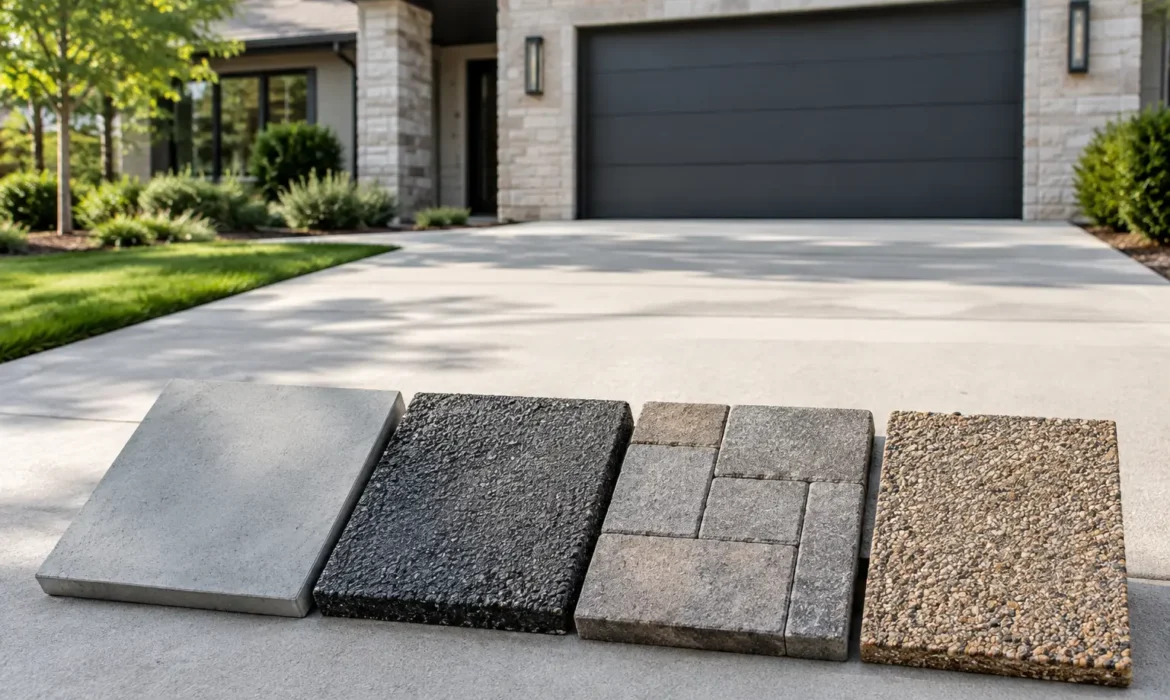
Most driveway decisions come down to asphalt, concrete, or a decorative concrete approach. Each can create an attractive, dependable surface when installed correctly, but each has different strengths and maintenance needs.
Asphalt for flexible, practical performance
Asphalt is a popular choice for driveways because it creates a smooth, dark surface that complements many homes and handles normal vehicle use well. Its flexibility can be useful through changing temperatures, particularly when paired with a stable, well-compacted base. It also offers a clean, finished look that can improve curb appeal without drawing attention away from the home.
Asphalt does require ongoing care. Periodic sealcoating helps protect the surface from moisture, sun exposure, and ordinary wear. Prompt attention to cracks and drainage issues can prevent smaller problems from spreading into larger repairs. It is a strong fit for homeowners who want a traditional driveway surface and are prepared to maintain it over time.
Concrete for strength and design flexibility
Concrete is valued for its clean appearance, long-term strength, and ability to suit a wide range of property styles. It works especially well where homeowners want crisp edges, a lighter surface color, or a driveway that connects visually with walkways, patios, steps, or retaining walls.
Concrete can also be finished in different ways to add texture or visual character. A decorative finish may be a good choice for a prominent front entrance, a large circular drive, or a property where the driveway is part of the overall landscape design. The trade-off is that concrete needs thoughtful joint placement, sound base preparation, and careful installation to manage normal movement and reduce the chance of cracking.
Decorative concrete when curb appeal is a priority
A driveway does not have to look purely utilitarian. Decorative concrete can provide the performance of a hard surface while adding pattern, texture, or a more customized appearance. This approach can help connect the driveway with a patio, front walkway, or outdoor living area, creating a more intentional first impression.
Decorative finishes are best chosen with the entire exterior in mind. The home’s architectural style, existing hardscapes, landscaping, and desired maintenance level should all influence the final design. A finish that looks striking in a small sample may feel too busy across a wide driveway, so scale is worth discussing during planning.
Let Drainage Shape the Decision
Water is one of the most important factors in driveway performance. A driveway should guide water away from the home, garage, and areas where it can collect. When water sits on or beneath the surface, it can weaken the base, contribute to cracking, and create uneven sections.
Before choosing a material, look at the grade of the property. Does rainwater run toward the garage? Is there a low area near the street or beside the driveway? Are downspouts discharging near the pavement? Is the driveway bordered by soil that washes onto the surface during heavy rain? These details can change the scope of the work and should be addressed before the finished surface is installed.
Material alone cannot solve a drainage problem. Proper slope, grading, edge support, and base preparation do the real work. This is why a site evaluation matters. A driveway is only as dependable as the ground beneath it and the path water takes around it.
Pay Attention to the Base, Not Just the Surface
Property owners naturally focus on the visible material, but the base is where long-term durability begins. The base supports vehicle loads, promotes drainage, and helps the driveway resist shifting. If the ground is soft, poorly compacted, or holding moisture, even a high-quality surface can fail sooner than expected.
A professional evaluation should identify weak areas, existing damage, and conditions that may need correction before paving or concrete placement. In some cases, an older driveway can be removed and rebuilt on a stronger foundation. In others, the condition of the existing base may influence whether replacement, resurfacing, or targeted repairs make sense.
This is also the time to discuss driveway thickness, transitions to garages or sidewalks, and edge conditions. These are not minor construction details. They affect how the driveway feels under tires, how well it drains, and how finished the property looks from the street.
Match Maintenance to Your Expectations
Every driveway material needs some level of attention. The key is choosing one that fits the amount of upkeep you are willing to provide.
Asphalt benefits from regular inspections, crack repair, and sealcoating as needed. Keeping the surface clean and addressing oil or fluid spills promptly also helps preserve its appearance. Concrete generally does not require sealcoating in the same way, but it should be kept clean, protected from harsh deicing practices, and monitored for cracking or joint deterioration.
For either material, avoid letting water problems linger. Keep drainage paths clear, trim vegetation that pushes against edges, and repair small defects before traffic and weather make them worse. Consistent maintenance protects both the appearance and the useful life of the driveway.
Consider the Driveway as Part of the Whole Property
A driveway should work with the property, not feel added on after the fact. Consider how it meets the garage, front walk, entry steps, landscaping, and street. The width should allow comfortable vehicle access without overwhelming the front of the home. Curves and borders can improve the layout, but they should also be practical for turning, parking, and snow removal.
Color and texture deserve consideration too. Asphalt provides a classic dark finish, while concrete can offer a brighter, more tailored appearance. For properties in Glen Burnie, Annapolis, and surrounding Maryland communities, mature trees and changing seasons can also affect the look of the surface. A shaded driveway may show organic debris more quickly, while a wide open drive may receive more sun exposure.
Commercial properties should take the same broad view. The drive aisle or entrance should support reliable traffic flow, present a professional appearance, and connect cleanly with parking areas, sidewalks, and building access points. A well-planned surface helps create a safer, more organized arrival experience for customers, residents, employees, and visitors.
Choose the Installer With the Same Care
The material is only one part of the outcome. Installation quality determines whether that material performs as it should. A dependable contractor will ask about drainage, traffic, site access, existing surface conditions, and your expectations for the finished appearance. They should explain the recommended approach in clear terms rather than treating every driveway as the same project.
At All Star Contracting Services, driveway planning begins with the property’s real conditions and the owner’s priorities. Whether the goal is a durable asphalt driveway, a clean concrete surface, or a decorative feature that elevates curb appeal, the best results come from thoughtful preparation and skilled execution.
A new driveway is a daily-use investment, not just a finishing touch. Choose a material that supports the way your property works, give drainage and base preparation the attention they deserve, and work with professionals who build for years of dependable use.