
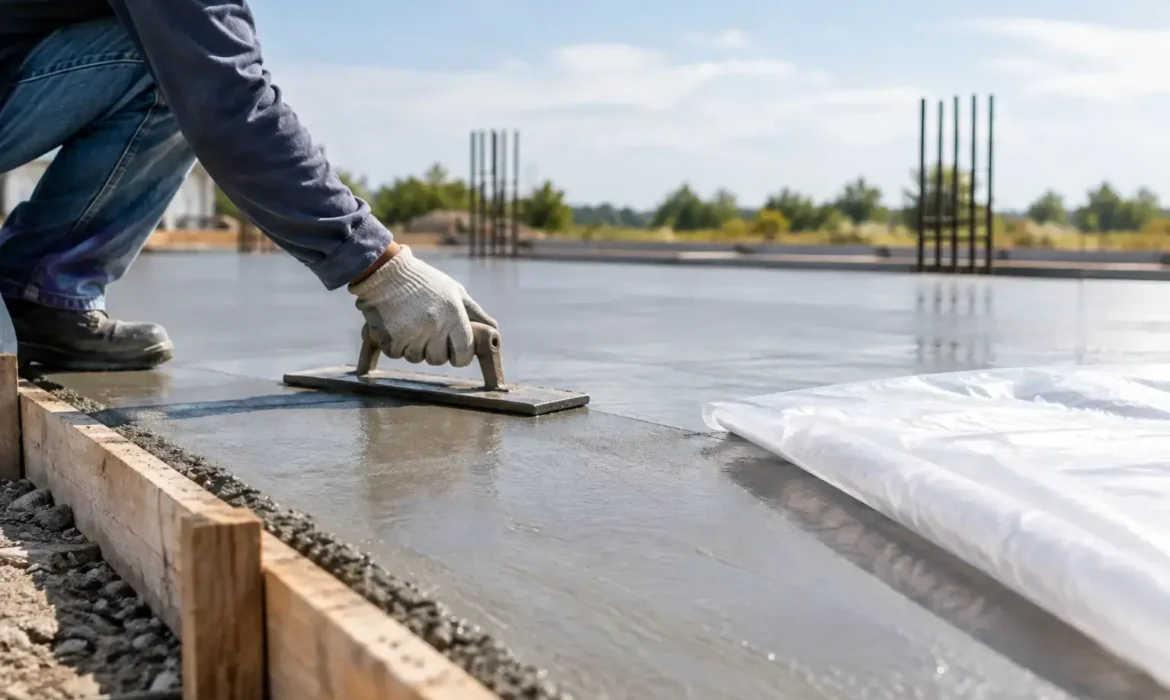
A new concrete driveway or patio can look finished within hours, but its most critical work is happening below the surface. This concrete curing time guide explains when new concrete can handle foot traffic, vehicles, furniture, and everyday use – and why protecting it early is one of the best ways to preserve its strength and appearance.
Concrete does not harden because it simply dries out. It gains strength through a chemical process between cement and water. That process needs time, stable moisture, and suitable temperatures. Rushing the schedule can leave a surface more vulnerable to cracking, chipping, tire marks, and premature wear, even when it initially appears solid.
What Curing Means for Your Concrete Surface
Curing is the period when newly placed concrete retains enough moisture to develop its intended strength. The first few days matter most, but strength continues to build for weeks. A professional installation plan accounts for the concrete mix, slab thickness, joint layout, weather conditions, drainage, and the surface’s intended use.
For homeowners, curing affects whether a patio stays smooth and durable through changing seasons. For commercial properties, it affects how quickly a walkway, entrance, loading area, or parking surface can safely return to service. A good timeline protects the investment without creating unnecessary disruption.
Do not confuse curing with drying. A slab may look dry on top long before it has developed enough internal strength for traffic or heavy loads. In fact, allowing fresh concrete to lose moisture too quickly can interfere with the curing process.
Concrete Curing Time Guide: A Practical Timeline
Every project should follow the recommendations for its specific mix and installation conditions, but these timeframes give property owners a useful planning baseline.
The first 24 hours: Keep all traffic off
Fresh concrete is highly vulnerable during its first day. Keep people, pets, vehicles, furniture, planters, and equipment off the surface. Footprints, scuffs, and edge damage can occur before the slab has set sufficiently.
This is also the period when weather protection matters most. Strong sun, low humidity, wind, heavy rain, or sudden temperature changes can affect the finish and early strength development. Contractors may use moisture-retaining methods or protective coverings based on site conditions.
After 24 to 48 hours: Limited foot traffic
Many concrete surfaces can handle careful foot traffic after one to two days. That does not mean the concrete is ready for normal use. Avoid dragging furniture, rolling heavy trash containers, placing ladders, or concentrating weight near edges and corners.
For a residential walkway, this may be enough time for cautious access. A patio should still remain clear of grills, tables, planters, and other heavy items. If the weather has been unusually cold, wet, or unstable, allow more time rather than relying on the calendar alone.
Around 7 days: Strength is developing, but caution remains necessary
At approximately one week, concrete has gained a substantial portion of its long-term strength. Many residential driveways can begin handling passenger vehicles at this point when the slab was properly installed and conditions have been favorable.
That timeline is not a guarantee for every driveway. Larger vehicles, work trucks, trailers, dumpsters, and moving equipment apply far greater stress than a typical passenger car. They should stay off the surface until the contractor confirms that the concrete is ready. Turning tires while stopped can also mark or stress a young driveway, so drivers should enter and exit smoothly.
At 28 days: Full curing benchmark
Concrete is commonly evaluated at 28 days because it has reached its expected design strength under appropriate curing conditions. By this point, a properly installed slab should be ready for its intended service, including regular vehicle use on driveways and normal commercial traffic where the slab was designed for it.
Strength does not suddenly stop increasing on day 28. It continues to gain strength gradually. Still, the 28-day point is a useful benchmark for scheduling heavier use, arranging site access, and planning the next phase of a larger exterior project.
What Can Change the Curing Schedule?
The calendar is only part of the answer. Concrete responds to the environment and to the demands placed on it. Four conditions have the greatest effect on a realistic curing schedule:
- Temperature: Mild conditions support predictable curing. Cold weather slows strength gain, while hot weather can cause moisture to leave the surface too quickly.
- Rain and moisture: Concrete needs moisture to cure, but direct rain on a newly finished slab can damage the surface. Standing water, runoff, and poor drainage should also be controlled.
- Slab thickness and mix design: A thicker driveway or commercial slab may be built for heavier demands, but its use schedule should still reflect the specified materials and project conditions.
- Load type: A patio chair and a delivery truck are not comparable loads. Concentrated weight, sharp point loads, and turning tires require more caution than simple foot traffic.
Maryland weather can make these factors especially relevant. A project completed during a mild, stable stretch may progress predictably, while a sudden cold snap, heat wave, or storm can call for adjustments. An experienced concrete contractor plans for those variables rather than treating every installation as identical.
How to Protect Concrete While It Cures
The best protection is simple: give the surface time and keep unnecessary weight off it. Avoid washing the area, pressure cleaning, applying de-icing products, or allowing landscaping crews to cross the slab during the early curing period. Do not park on a driveway just because it feels hard beneath your shoes.
If a new driveway is your only vehicle access, discuss the access plan before work begins. A contractor can help establish realistic expectations for parking arrangements and return-to-use timing. For commercial sites, phased work and clear traffic control can reduce disruption while allowing each section the time it needs.
Protect the edges as carefully as the center of the slab. Edges and corners are more exposed to impact, and they can chip if heavy objects are dropped or rolled across them too soon. When furniture or equipment is moved back onto a cured patio or walkway, lift it whenever possible instead of dragging it.
New concrete can also be more susceptible to staining. Keep motor oil, paint, fertilizer, leaf piles, and metal furniture rust away from the surface. Prompt cleanup helps maintain a cleaner, more consistent appearance as the concrete matures.
When to Seal New Concrete
Sealing can help concrete resist moisture intrusion, stains, and surface wear, but it should not be rushed. The right timing depends on the concrete, the sealer, site exposure, and the desired finish. Applying a coating before the slab has adequately cured may trap moisture or interfere with the result.
This is particularly relevant for decorative patios and stamped concrete, where color and texture are part of the finished look. The installation team should provide product-specific guidance on when a protective sealer can be applied and when routine maintenance should begin.
Signs You Should Wait Longer
A surface that looks firm is not always ready for service. It is wise to extend the curing period if temperatures have been low, the slab was exposed to difficult weather, or the project will receive heavy traffic. Fresh concrete that shows discoloration from moisture, a soft-looking finish, or signs of surface disturbance should be assessed before it is opened to vehicles or equipment.
The most reliable answer comes from the contractor who installed the work. They know the mix, placement conditions, thickness, reinforcement approach, and use requirements for the specific surface. That project-level knowledge is more useful than a one-size-fits-all rule found online.
A well-built concrete surface rewards patience. Give a new driveway, walkway, or patio the curing time it needs, then enjoy a cleaner-looking, stronger foundation for the way your property works every day.