
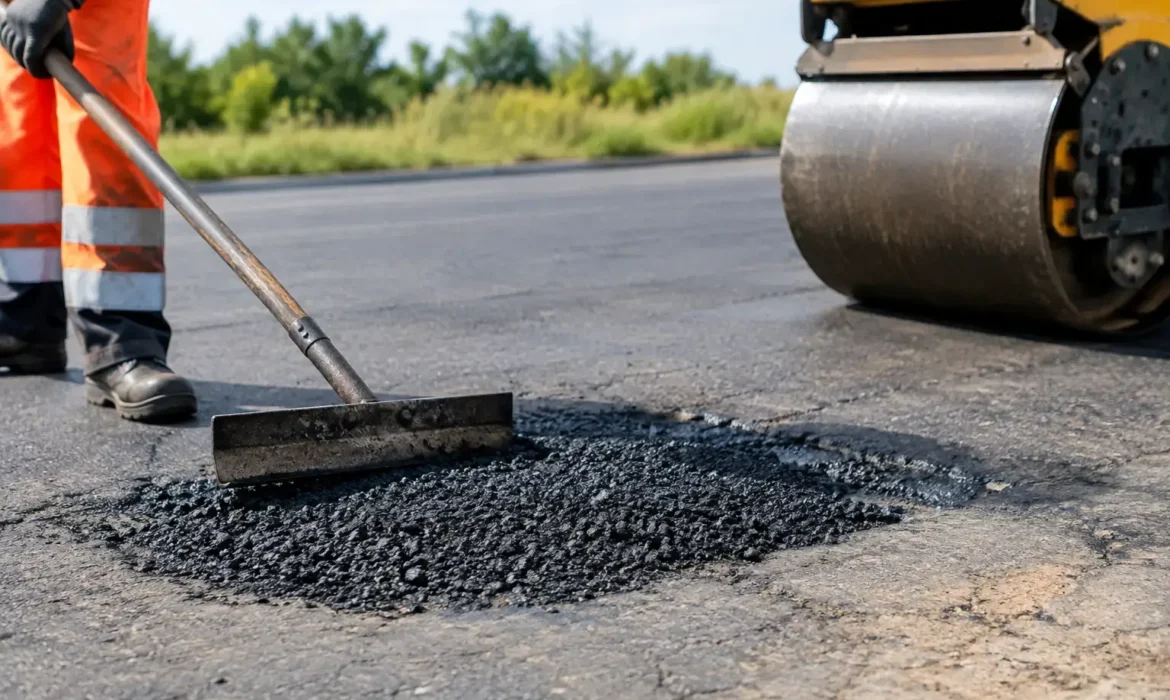
A pothole rarely starts as a pothole. Water enters through a crack, weakens the material beneath the surface, and traffic gradually breaks the asphalt apart. Choosing the right asphalt patching methods at that point can stop a small defect from becoming a larger repair area, but only when the repair matches the cause of the damage.
For Maryland property owners and managers, patching is not simply a matter of filling a hole. Changing temperatures, rain, snow, vehicle weight, drainage, and the condition of the underlying base all affect whether a repair holds. A professional assessment identifies what failed before determining how far the repair should go.
Why Patch Repairs Fail Too Soon
The visible damage is not always the full problem. Asphalt may look worn on top while the supporting stone base remains stable. In that case, removing the failed surface material and placing new asphalt can create a dependable repair. If the base has softened, shifted, or washed out, however, a surface-only patch may sink, crack around the edges, or break apart under traffic.
Water is usually the biggest concern. Ponding near a low area, runoff entering a crack, or drainage directed toward a driveway edge can continue damaging the pavement after the patch is complete. The repair itself may be sound, but the same moisture issue will keep working below it.
Traffic matters as well. A residential driveway that supports passenger vehicles needs a different repair approach than a parking lot travel lane used by delivery vehicles, dumpsters, or frequent turning traffic. The right material depth, compaction, and repair boundaries should reflect how the surface is actually used.
Asphalt Patching Methods for Different Damage
There is no single patching method that works best in every setting. The condition of the asphalt, the time of year, the depth of failure, and the expected traffic all guide the decision.
Cold Patch for Short-Term Repairs
Cold patch material can be installed without heating and is often used when weather or timing makes a temporary repair necessary. It can help address a small pothole quickly, improve a rough area, and reduce the chance of loose asphalt becoming a trip or tire hazard.
Its convenience is also its limitation. Cold patch is generally a short-term solution, particularly in areas exposed to regular vehicle traffic or standing water. It may work loose or settle as temperatures change. For a driveway or parking lot expected to perform for years, cold patch is best viewed as a holding measure until a more permanent repair can be completed.
Surface Patching for Shallow Failures
A surface patch addresses localized damage that has not reached deeply into the pavement structure. The contractor removes loose, deteriorated asphalt, cleans the repair area, applies a bonding layer where appropriate, installs new hot asphalt, and compacts it to create a tight, level repair.
This approach can be effective for shallow potholes, small broken areas, and pavement sections where the base remains firm. Careful edge preparation is essential. A patch placed over crumbling edges has little chance of lasting because the new material is only as stable as the surface surrounding it.
Surface patching is often a practical choice when damage is limited and the broader pavement is still in serviceable condition. It preserves more of the existing asphalt while restoring a smoother, safer driving surface.
Full-Depth Patching for Base Failure
When asphalt has repeatedly sunk, broken apart, or developed deep potholes, the problem often extends below the top layer. Full-depth patching removes the damaged asphalt and excavates unstable base material beneath it. The area is rebuilt with properly placed and compacted stone before new asphalt is installed.
This is a more involved repair, but it addresses the reason the pavement failed instead of covering the symptom. It is commonly appropriate for heavily traveled parking areas, driveway sections where vehicles turn or stop frequently, and locations affected by poor drainage.
A full-depth patch should have clean, squared edges rather than irregular, feathered boundaries. Straight, sound edges allow the new asphalt to compact tightly against the existing pavement. The finished patch is then blended to maintain drainage and reduce abrupt transitions for vehicles.
Infrared Repairs for Sound Surrounding Pavement
Infrared repair uses controlled heat to soften existing asphalt in a defined area. The softened material can be loosened, reworked, and combined with fresh asphalt as needed before it is compacted. This method can reduce visible seams and make efficient repairs where damage is localized and the surrounding pavement remains structurally sound.
It is not the answer for every failed area. If the base below the asphalt is unstable, heating the surface does not rebuild that support. Infrared repair is most useful for shallow distress, surface irregularities, and small areas where a clean, blended finish is a priority.
Preparation Determines the Life of the Patch
The most durable asphalt patching methods begin before fresh asphalt arrives. Loose material must be removed completely, and the repair area needs a firm, clean boundary. If water, mud, or crumbled asphalt remains at the bottom of the excavation, the patch starts with a weak foundation.
Base preparation is especially important in full-depth work. The stone base needs to be placed in appropriate lifts and compacted so it can support the asphalt above it. Skipping this step may leave a repair that looks level on installation day but settles after rain and traffic expose the weakness underneath.
Proper compaction of the new asphalt is equally important. Asphalt contains small air spaces after placement. Rolling and compacting it correctly brings the material together, improves density, and helps the patch resist water intrusion and traffic wear. Poorly compacted asphalt often develops premature raveling, cracks, or low spots.
The repair should also be checked against the existing slope. A patch that creates a shallow basin can collect water, even when the rest of the pavement drains well. Maintaining a smooth grade directs water away from the surface and protects the repair over time.
When Patching Is the Right Investment
Patching makes sense when deterioration is concentrated in distinct areas and the remaining pavement still has a stable structure. It can restore function without replacing an entire driveway or parking lot that has years of service left.
For homeowners, common examples include an isolated pothole near the garage, a broken section at the end of a driveway, or damage along an edge where water has eroded support. For commercial properties, patching is often used to correct localized failures in traffic lanes, parking stalls, entrances, and areas near drainage points.
The repair should be evaluated as part of the larger pavement condition. A few isolated patches can be a smart maintenance step. Widespread cracking, extensive settling, repeated potholes, or broad alligator-style cracking may indicate that patching alone will become a cycle of short-lived repairs. In those cases, a larger rehabilitation plan may provide better long-term performance.
Protecting a New Asphalt Patch
A completed patch benefits from routine observation, especially after heavy rain and seasonal temperature changes. Watch for water that lingers around the repaired area, cracks developing at the patch edge, or signs that the surface is sinking. Addressing those issues early is far easier than waiting for a new pothole to form.
Keeping drains, curbs, and pavement edges clear also helps manage water. On commercial properties, monitoring areas exposed to heavy turning traffic can reveal early stress before it spreads. On residential driveways, avoid allowing heavy equipment or repeated loading to sit on the same repaired spot when possible.
Sealcoating can be part of a broader maintenance program once asphalt is in suitable condition and has had appropriate time to cure. It helps protect the surface from weathering, but it is not a substitute for repairing failed asphalt or a weak base. Cracks, potholes, and drainage concerns should be addressed first.
Choosing a Contractor for Lasting Results
A dependable contractor should explain what caused the damage, not just recommend a material. Ask whether the base appears stable, how the repair edges will be prepared, how drainage will be maintained, and whether the proposed patch is intended as a temporary or long-term solution.
Clear communication matters because the visible size of a pothole does not always show the true repair area. Removing enough damaged pavement to reach sound material can be the difference between a clean, durable patch and one that fails around the perimeter. Experienced crews balance efficient repair work with the preparation needed for lasting performance.
A well-planned patch restores more than a smooth surface. It helps protect vehicles, improves property appearance, reduces water-related deterioration, and gives owners a clearer path for maintaining their pavement before small damage becomes a larger project.