
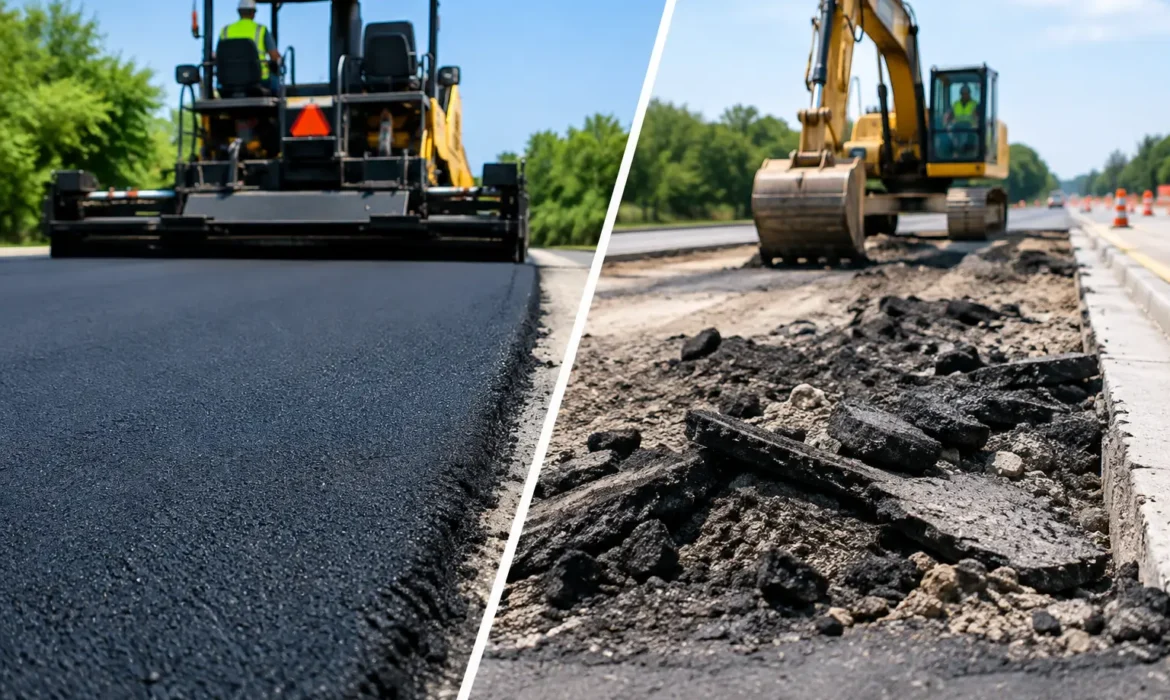
A driveway or parking lot can look worn out long before it has reached the end of its useful life. The decision between asphalt overlay versus replacement comes down to what is happening beneath the surface, not simply how many cracks you can see. A fresh layer of asphalt can transform a stable, aging surface. But when the base has failed, covering the problem only delays a more disruptive repair.
For Maryland property owners, that distinction matters. Seasonal temperature changes, rain, snow, vehicle traffic, and poor drainage all affect pavement differently over time. The right solution should improve appearance while giving the surface the strength to perform through the conditions it faces every day.
What an Asphalt Overlay Actually Does
An asphalt overlay, sometimes called resurfacing, involves installing a new layer of asphalt over an existing paved surface. Before that new material is placed, a professional paving crew addresses isolated damaged areas, cleans the pavement, prepares edges and transitions, and corrects minor surface concerns. The new asphalt layer is then installed and compacted to create a uniform, renewed finish.
Overlay work is not a shortcut when it is used on the right pavement. It is a practical restoration method for driveways and parking areas with a sound foundation and mostly surface-level wear. Fading, light cracking, minor raveling, and a weathered appearance can often be resolved with resurfacing when the pavement remains stable under traffic.
The benefit is easy to see. A properly installed overlay creates a clean, dark surface with improved curb appeal, smoother driving, and better protection for the existing pavement. For commercial properties, it can also improve the first impression at entrances, parking areas, and travel lanes without removing a pavement structure that still has useful life left.
When Asphalt Overlay Versus Replacement Favors Resurfacing
An overlay is usually the stronger option when damage is limited to the upper portion of the asphalt and the existing base is still firm. A paving professional looks for pavement that drains appropriately, has no widespread movement, and does not show deep structural breakdown.
For example, a residential driveway may have light cracks from age and weather exposure but still feel solid when vehicles enter and exit. If the edges remain intact and there are no recurring low spots or soft areas, resurfacing may provide the durable, refreshed result the owner wants.
The same principle applies to a commercial parking lot. A lot with faded asphalt, surface roughness, and scattered minor cracking may be a good candidate for an overlay if it continues to support normal traffic without rutting, broad depressions, or failing sections. Targeted repairs can be completed before resurfacing so the finished pavement looks consistent and performs as one surface.
Drainage deserves close attention. Water should move away from the paved area instead of pooling along entrances, low points, or building-side edges. If the existing pavement has workable slopes and a stable foundation, an overlay can preserve those conditions while renewing the driving surface.
When Full Asphalt Replacement Is the Better Investment
Replacement becomes necessary when the damage extends below the visible asphalt layer. Cracks are often clues, but the pattern and behavior of those cracks matter more than their appearance alone.
Large interconnected cracks, recurring potholes, deep depressions, rutting in wheel paths, crumbling edges, and soft spots can point to a weakened base. These problems may result from water intrusion, inadequate drainage, repeated heavy loads, or years of pavement movement. Adding new asphalt over an unstable structure may make the surface look better temporarily, but the underlying movement can reappear through the new layer.
Full replacement involves removing the failed asphalt, evaluating and rebuilding the base as needed, establishing proper grading, and installing new asphalt in the appropriate depth for the property’s use. This process addresses the cause of the failure rather than covering its symptoms.
Replacement is particularly valuable for high-traffic areas. Delivery lanes, commercial entrances, parking areas used by heavier vehicles, and driveways with persistent base problems need a pavement structure that can carry those loads. Starting over in isolated failed areas, or across the full surface when necessary, provides a stronger foundation for long-term performance.
A property owner may also choose replacement when the existing pavement has become too uneven to correct through resurfacing alone. Significant height differences at garages, curbs, sidewalks, drainage features, or entrances require careful planning. In those situations, removing and rebuilding the pavement may create a cleaner transition and a more reliable finished grade.
The Condition Below the Surface Decides the Project
The most useful question is not, “How bad does the asphalt look?” It is, “Why is it failing?” A professional site evaluation helps answer that question before work begins.
Surface oxidation is normal as asphalt ages. The color fades, the binder becomes less flexible, and the pavement may develop fine cracks. Those are often maintenance and resurfacing concerns. Structural failure looks different. The pavement may shift under a vehicle, hold water after rain, break apart in concentrated areas, or develop cracks that widen and return after prior repairs.
Water is frequently part of the story. When moisture reaches the base, it can weaken the compacted material that supports the asphalt. In Maryland, freeze-thaw cycles can make that damage worse as trapped water expands and contracts. A replacement project gives the contractor an opportunity to correct base conditions and improve how water moves across the surface.
Traffic is another deciding factor. A quiet residential driveway and an active commercial lot do not need the same pavement design. What holds up well for passenger vehicles may not be sufficient for frequent service vehicles, delivery traffic, or heavier equipment. Matching the pavement structure to real-world use protects the property and helps avoid premature damage.
How the Two Options Differ During Construction
Overlay projects generally involve less removal because the existing pavement remains in place. The crew still needs to prepare the surface carefully, repair damaged sections, and create clean transitions at edges and adjoining areas. A quality overlay is only as dependable as the preparation beneath it.
Replacement is more involved because failed material is removed and the supporting layers are rebuilt. This process creates a chance to correct deeper issues, but it also requires thoughtful project coordination. Access, traffic flow, parking needs, and the condition of adjacent concrete or landscaping should be considered before the work begins.
For homeowners, that may mean planning how vehicles will enter and leave the property while the driveway is under construction. For businesses and property managers, it may mean scheduling work in phases to reduce disruption for customers, employees, tenants, or deliveries. Clear communication and a disciplined schedule are essential for either approach.
Do Not Let a New Surface Hide an Old Problem
An attractive black finish is not the goal by itself. The goal is pavement that remains safe, functional, and presentable after changing weather and daily use have tested it. Choosing an overlay for a structurally sound surface can preserve a valuable pavement asset. Choosing replacement for a failed surface can prevent repeated patching and recurring frustration.
A thorough evaluation should include the pavement’s cracking pattern, edge condition, drainage, low spots, traffic demands, and the firmness of the base. It should also account for how the driveway or parking area connects with garages, walkways, curbs, and entrances. Details at those transitions often determine whether water drains correctly and vehicles move comfortably across the finished surface.
For property owners who are unsure which path fits their pavement, an on-site assessment provides a clearer answer than a surface-level guess. All Star Contracting Services can evaluate the condition of your asphalt and recommend work that supports your property’s appearance, function, and long-term durability. The right repair begins by treating the condition you have, not just the damage you can see.