
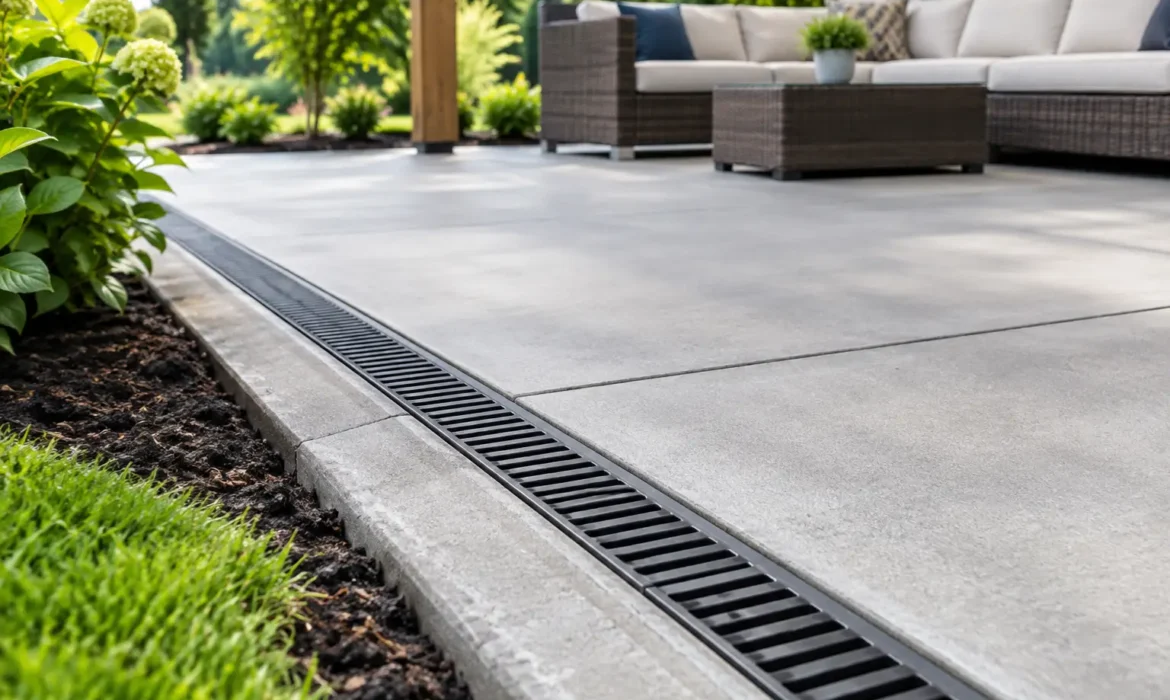
Water that sits on a concrete patio does more than interrupt a backyard gathering. It can create slippery walking conditions, wash soil away from edges, stain the surface, and place unwanted moisture near a home or commercial building. The right concrete patio drainage solutions move water away intentionally, protecting both the patio and the surrounding property.
For Maryland property owners, drainage deserves attention before a patio is poured and whenever an existing slab begins holding water. Rain, seasonal temperature changes, shaded areas, and heavy runoff from nearby roofs can all expose a drainage weakness. A durable patio should look finished, feel comfortable underfoot, and direct water where it can drain without causing a new problem somewhere else.
Start With the Source of the Water
The best drainage approach depends on why water is collecting. A patio may have an insufficient slope, but it may also be receiving runoff from downspouts, a driveway, a hillside, or a neighboring hard surface. Treating only the visible puddle without identifying the source can leave the underlying issue unresolved.
A contractor will typically look at where water enters the area, how it travels across the slab, and where it can safely exit the property surface. They will also inspect the patio edges. Water pooling along an edge can soften adjacent soil, create erosion, and eventually leave portions of the concrete without consistent support.
A simple observation after rainfall can be useful. Note where puddles form, how long they remain, and whether water flows toward the building, landscaping, walkways, or a lower section of the yard. These details help determine whether the fix requires a small drainage improvement or a more complete patio reconstruction.
Proper Slope Is the Foundation of Patio Drainage
For new construction, planned slope is usually the most effective and durable answer. The concrete surface should be shaped to guide water away from structures and toward a suitable drainage area. The slope must be gradual enough that the patio remains comfortable for furniture, outdoor dining, and normal foot traffic, while still being purposeful enough to prevent standing water.
This is why base preparation matters as much as the finished concrete. A patio can appear level at first glance while still having the correct grade. Beneath it, a stable, well-compacted base supports that intended pitch and reduces the chance of settlement changing the drainage path over time.
A patio that is too flat may hold water in shallow depressions. A patio with inconsistent slope can send runoff in several directions, including toward a foundation or doorway. When a new patio is part of a larger exterior project, the driveway, walkway, landscape grade, and roof drainage should be considered together rather than as isolated features.
When an Existing Patio Has Settled
A settled patio is different from a patio that was poured with the wrong pitch. If a section has dropped because of soil movement, poor base support, or erosion beneath the slab, simply adding a surface drain may not correct the larger problem. The water may continue to collect because the concrete itself is no longer properly supported.
Depending on the condition of the slab, repairs may involve addressing localized low areas, improving drainage around the perimeter, or removing and replacing affected sections. The right choice depends on the extent of cracking, the direction of water flow, and whether the patio can still perform as a unified surface. A professional evaluation prevents a short-term patch from becoming repeated maintenance.
Concrete Patio Drainage Solutions for Common Problems
Several drainage methods can work well with concrete patios. The strongest result often combines more than one method because the patio, roofline, surrounding soil, and hardscape all influence water movement.
Surface Drains for Low Points
A surface drain collects water at a designed low point and routes it through an underground pipe to a suitable discharge area. This option can be effective when the patio must remain close to level for its intended use or when surrounding grades limit where runoff can travel naturally.
The drain needs to be placed carefully. If it sits above the actual low point, water will still pool nearby. If the outlet route is not planned correctly, the collected water can reappear in a lawn, landscape bed, or other area that was not designed to handle it. Installation quality is especially important because the drain, pipe, concrete edge, and surrounding grade must work as one system.
Linear Drains Along Doors and Patio Edges
A linear drain is a narrow channel that captures water along a longer edge of the patio. It is often useful near entry doors, transitions between a patio and a building, or locations where water approaches from several directions. Instead of relying on a single drain point, it intercepts runoff across a wider span.
This approach is practical when the patio cannot be sloped sharply away from a structure because of door thresholds or existing elevations. It can also create a clean, intentional transition between a concrete patio and another exterior surface. Like any drainage channel, it must be kept free of leaves, mulch, and debris so water can enter as designed.
Redirecting Downspout Discharge
Roof runoff is one of the most common causes of patio puddling. Even a well-pitched slab can be overwhelmed if a downspout releases a concentrated stream of water onto the patio edge. Redirecting that discharge farther from the concrete can reduce staining, soil washout, and moisture near the building.
The discharge route should be selected with the entire property in mind. Sending roof water directly onto a walkway, driveway, or neighboring low spot merely transfers the problem. A properly planned extension or buried route should deliver water to an area that can accept it without undermining pavement or saturating the landscape.
Perimeter Drainage and Grading Improvements
When water collects along the patio boundary, the surrounding grade may need attention. Regrading soil, shaping a shallow swale, or adding a perimeter collection system can keep runoff from flowing back toward the slab. This is particularly helpful for patios built at the base of a slope or beside planting beds that retain too much water.
Landscaping should complement drainage rather than block it. Thick mulch, raised bed borders, and decorative edging can unintentionally trap water against concrete if installed too high. Keeping patio edges visible and allowing surface water a clear path away helps preserve both appearance and performance.
Why Cutting Corners Can Create Larger Repairs
It is tempting to treat standing water with a quick coating, extra caulk, or a thin layer of material over a low area. Those measures may change the appearance temporarily, but they do not correct drainage, settlement, or runoff patterns. In some cases, they can trap moisture or create an abrupt surface that becomes a trip concern.
Drainage repairs also need to account for the patio’s joints and movement. Concrete expands and contracts with changing conditions. A drainage addition that is rigidly installed without considering those movements can crack, separate, or allow water beneath the slab. Durable work depends on proper preparation, sound materials, and details that fit the condition of the existing surface.
For commercial properties, drainage planning has an added operational benefit. Water at entrances, outdoor seating areas, service paths, and pedestrian routes can affect safety and daily use. A well-designed drainage approach helps keep those areas cleaner, more dependable, and easier to maintain after storms.
Plan Drainage Before a New Patio Is Installed
The easiest time to solve a drainage problem is before concrete is placed. During planning, the patio layout can be adjusted to work with the property’s natural grade, direct water away from structures, and accommodate nearby walkways or retaining features. This avoids unnecessary demolition later and gives the finished area a more intentional look.
A new patio is also an opportunity to decide how it will be used. An outdoor kitchen, seating wall, fire feature, or covered section can alter runoff patterns and affect where drains or slopes belong. Thoughtful planning keeps water from collecting beneath furnishings, against vertical features, or at the transition into the home.
All Star Contracting Services approaches concrete work with the full site in view, from base conditions and slope to the surrounding surfaces that influence drainage. Clear communication before installation helps property owners make practical decisions that support long-term durability and curb appeal.
Standing water is a signal worth addressing early. Whether the answer is a better slope, a targeted drain, redirected roof runoff, or a rebuilt section of concrete, the goal is the same: a patio that stays attractive, stable, and ready to use after the rain stops.