
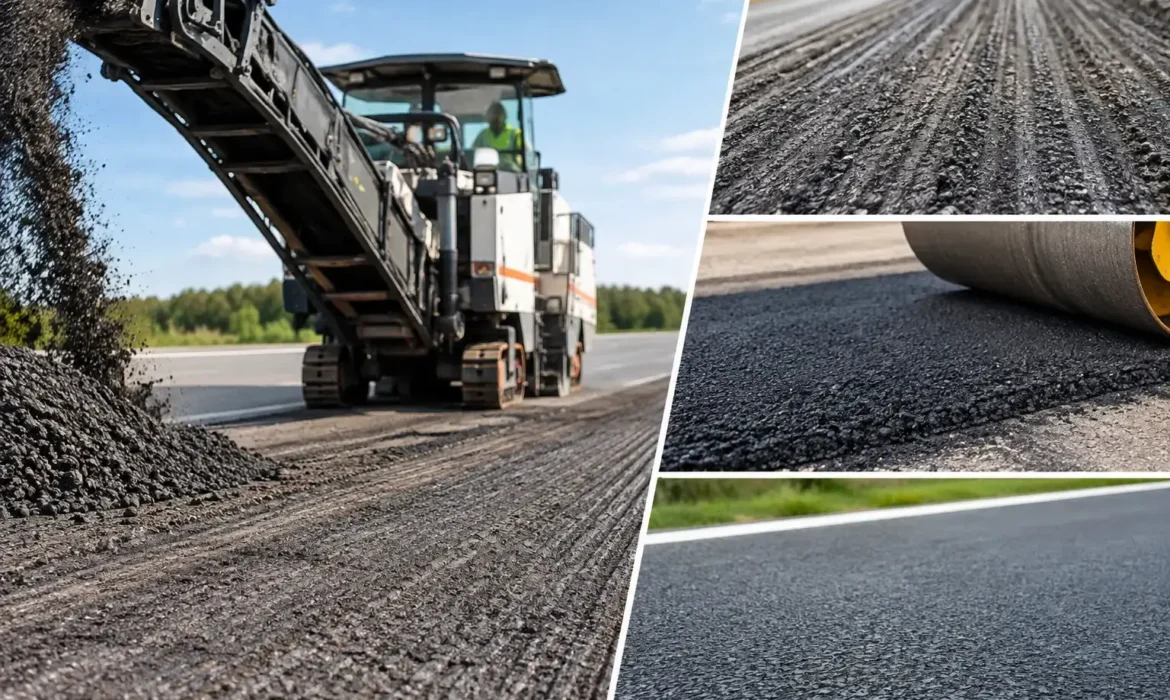
A driveway or parking lot can look worn long before it has reached the end of its useful life. Surface cracks, faded areas, shallow ruts, and uneven transitions often create a clear need for work, but they do not always call for complete removal. An informed asphalt milling comparison helps property owners separate surface-level problems from structural failures, so the selected repair supports both appearance and long-term performance.
Milling, overlaying, and full asphalt replacement each solve different conditions. The right choice depends on what is happening beneath the surface, how water moves across the pavement, the amount of vehicle traffic, and how the repaired area must connect with garages, curbs, sidewalks, entrances, and drainage points.
What an Asphalt Milling Comparison Should Measure
Milling is the controlled removal of an existing asphalt layer. A specialized machine cuts away pavement at a set depth, creating a clean, textured surface that is ready for new asphalt. In many projects, milling is followed by an overlay, which is a new layer of asphalt installed over the prepared surface.
That distinction matters. Milling is a preparation and correction method, while an overlay is the new finished surface placed after the underlying pavement has been addressed. Full replacement goes further by removing failed asphalt and rebuilding the pavement structure as needed.
A useful comparison should look beyond visible cracks. The central question is whether the existing base is still stable. If the base remains sound and the damage is concentrated in the upper asphalt layer, milling and overlaying can deliver an attractive, durable result. If the pavement is sinking, breaking apart, or repeatedly collecting water because of base failure, removal and reconstruction may be the better path.
The Condition of the Base
The base is the compacted material below the asphalt. It carries the load of vehicles and helps the pavement stay level through changing temperatures and moisture. When that foundation is stable, surface rehabilitation can make practical sense.
Signs of a likely base problem include widespread alligator cracking, deep depressions, recurring potholes, and pavement areas that move or feel soft under traffic. These conditions are not simply cosmetic. Adding new asphalt over an unstable foundation may improve the appearance temporarily, but the underlying movement can return through the new surface.
Drainage and Water Movement
Water is one of asphalt’s most persistent challenges, especially through Maryland’s seasonal rain, freezing temperatures, and thaw cycles. Water that sits on a parking lot or driveway can work into cracks, weaken supporting materials, and accelerate deterioration.
Milling can help restore a smoother profile and create room for new asphalt without raising the finished elevation. However, it will not solve every drainage concern on its own. If water is moving toward a building, pooling at an entrance, or collecting in a low section, the repair plan should address the pavement slope and the source of the water before a new surface is installed.
Milling and Overlay: When It Makes Sense
For many commercial parking lots and residential driveways, milling followed by an overlay is a strong middle-ground solution. The process removes distressed surface material and gives installers a controlled depth for the new asphalt layer. It can refresh the appearance of the pavement while maintaining more consistent transitions at curbs, garage thresholds, sidewalks, and other fixed surfaces.
This approach is often appropriate when the pavement has surface wear, minor cracking, oxidation, or shallow unevenness, but the underlying structure remains in good condition. It is also useful when an existing surface has already received prior overlays and adding another layer without milling would create an awkward height difference.
Milling supports a better tie-in at edges and adjoining pavement. Instead of leaving a raised lip where new asphalt meets an older section, the crew can mill a transition area and place the new material more evenly. For busy properties, that detail improves vehicle movement and gives the finished work a more intentional appearance.
Still, milling and overlaying are not automatic answers. If cracks are caused by movement in the base, new asphalt may eventually reflect those cracks. A professional evaluation should identify whether isolated base repairs are needed before the overlay is placed.
Asphalt Milling vs. a Simple Overlay
A simple overlay places fresh asphalt directly over the existing pavement. It can be effective when the existing surface is relatively level, the base is sound, and there is enough room to raise the pavement without causing problems at edges or entrances.
The limitation is elevation. New asphalt adds height. On a driveway, that can create an unfavorable transition at a garage or walkway. In a parking lot, it can change the relationship between the pavement and curbs, drainage inlets, loading areas, or door thresholds. It can also cover surface distress without removing the worn material beneath it.
Milling before overlaying creates physical space for the new surface. It also allows the crew to remove deteriorated asphalt and better manage the pavement profile. Where surface height and drainage are concerns, this extra preparation often produces a cleaner and more durable result than overlaying alone.
An overlay without milling is not necessarily inferior. It is simply more dependent on the condition and elevation of the existing pavement. A low-traffic driveway with sound asphalt and no transition concerns may be a candidate. A heavily used commercial lot with uneven areas and multiple fixed edges often benefits from a more detailed milling plan.
Milling and Overlay vs. Full Replacement
Full replacement is the most comprehensive option. It involves removing existing asphalt, addressing the supporting layers, and installing new pavement. This approach is generally best when structural failure is widespread, drainage problems originate below the surface, or the property needs a major change in layout or elevation.
Replacement gives a contractor direct access to the base. Soft sections can be corrected, damaged material can be removed, and the pavement structure can be rebuilt to support the expected traffic. For areas receiving frequent delivery vehicles, steady customer traffic, or repeated heavy loads, that level of reconstruction may be necessary for lasting performance.
The trade-off is project scope. Full replacement involves more excavation, material handling, and site preparation than surface rehabilitation. It can be the right decision when the pavement has failed from the ground up, but it is unnecessary when the base is stable and the problems are limited to the asphalt surface.
The best decision is not about choosing the biggest repair. It is about matching the work to the condition of the pavement. A well-planned milling and overlay project can extend service life significantly when the foundation is still doing its job. A full replacement can prevent repeated repairs when it is not.
Key Conditions That Influence the Decision
Property owners can often spot clues that guide the conversation. Surface cracks that are narrow and limited may point to aging asphalt. Shallow ruts, worn areas, and uneven pavement near transitions may be corrected with milling and a new overlay. Deep cracking in connected patterns, large potholes, or areas that hold water after repeated repairs suggest a closer look at the base and drainage.
Traffic matters as well. A residential driveway typically experiences lighter, more predictable use than a commercial parking lot, service lane, or loading area. The asphalt and base must be designed around the vehicles expected to use the space. A repair that works well for passenger vehicles may not hold up in an area exposed to heavier, frequent traffic.
Timing also deserves attention. Asphalt work depends on appropriate site conditions, and the project should be organized to limit disruption to residents, customers, staff, and visitors. For commercial properties, a phased plan may keep key access points open while sections are completed in an orderly sequence.
Questions to Ask Before Approving Asphalt Work
A clear site evaluation should leave you with practical answers. Ask whether the base appears stable, where water is draining, how much asphalt needs to be removed, and whether any localized repairs are needed before new asphalt is placed. You should also understand how the new surface will meet existing curbs, drive lanes, garage entrances, sidewalks, and adjoining pavement.
For property managers and business owners, it is helpful to discuss traffic flow during the work and identify areas that need to remain accessible. For homeowners, the focus may be on driveway access, clean edges, drainage away from the home, and a finished surface that improves curb appeal.
The strongest paving decisions begin with an honest assessment of the surface below your tires. When a contractor evaluates the base, drainage, elevations, and traffic demands together, the recommended repair can protect your property and provide a finished asphalt surface built to handle the seasons ahead.