
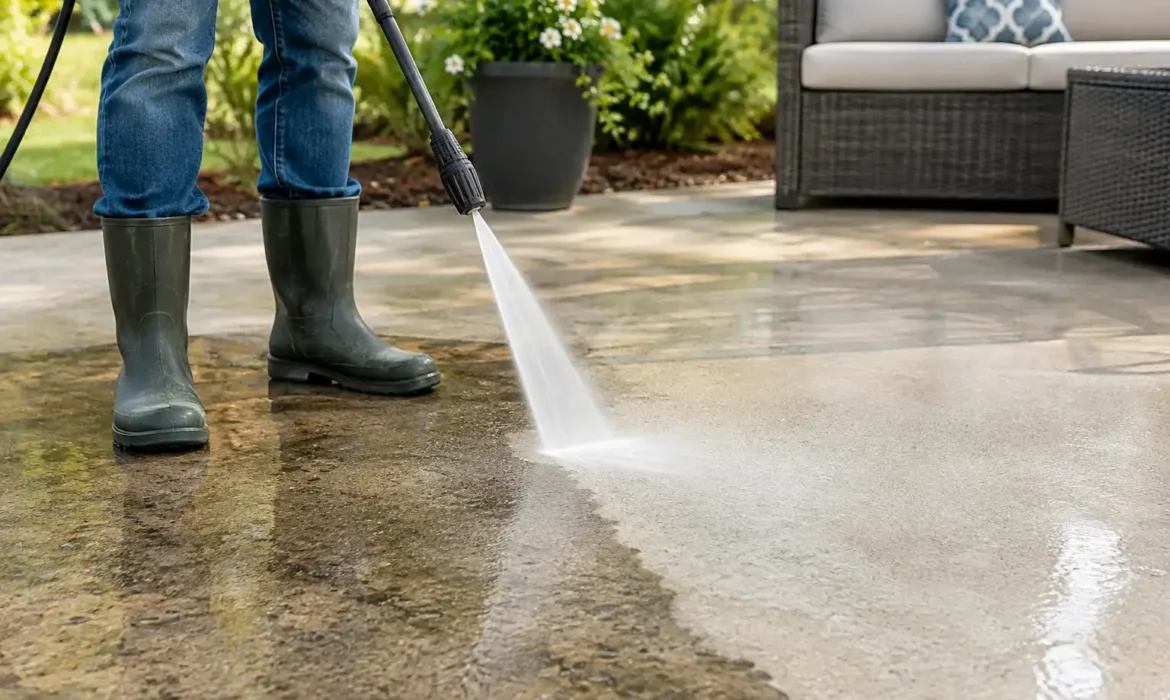
A concrete patio can look worn long before the concrete itself has reached the end of its service life. Pollen, leaf tannins, grilling grease, muddy shoes, mildew, and winter residue can all dull the surface. Knowing how to clean concrete patios the right way helps protect the finish while restoring the clean, welcoming outdoor space you intended to enjoy.
The goal is not to make concrete look unnaturally bright. It is to remove buildup and stains without scarring the surface, forcing water into vulnerable joints, or using cleaners that create more problems than they solve. A steady cleaning routine also makes it easier to spot small cracks, drainage concerns, and areas that may need professional attention.
Start With the Patio’s Condition
Before bringing out a hose or cleaner, take a close look at the patio. Most concrete can tolerate basic cleaning well, but its condition should determine how aggressive you get. Newer, smooth-finished, stamped, colored, or sealed concrete needs a gentler approach than an older plain slab with years of embedded dirt.
Look for cracks, scaling, flaking, loose edges, or areas where the surface is already rough. If concrete is deteriorating, high-pressure washing and harsh chemical cleaners can remove weakened material and make the damage more noticeable. Also check the joints and edges around the patio. These areas are more vulnerable to water intrusion and shifting than the middle of the slab.
Move furniture, planters, mats, and grills off the patio. Sweep thoroughly with a stiff outdoor broom, paying attention to corners and the line where the patio meets the house, landscaping, or retaining features. Dry debris can turn into muddy residue once it gets wet, so this simple first step makes the rest of the work easier.
How to Clean Concrete Patios for Routine Buildup
For seasonal cleaning, water, mild dish soap, and a stiff nylon-bristle brush are usually enough. Avoid wire brushes, which can leave metal marks or scratch a smoother concrete finish. Wet the patio first, then apply a bucket of warm water mixed with a small amount of soap. Work in manageable sections so the cleaning solution does not dry on the surface.
Scrub with firm, even pressure and rinse each section before moving on. A garden hose with a spray nozzle works well for most patios. Direct runoff away from the foundation and avoid flooding planting beds with soapy water.
For a larger patio, a surface-cleaning attachment on a pressure washer can provide more even results than a narrow spray tip. The attachment helps prevent streaks and limits the chance of gouging lines into the concrete. If you use a pressure washer, begin at a low setting, keep the tool moving, and test an inconspicuous spot first. More pressure is not always better, particularly on aged, decorative, or sealed surfaces.
A patio that only has pollen, dust, footprints, and light organic buildup may not need a pressure washer at all. Regular sweeping and a thorough soap-and-water wash once or twice a year can preserve its appearance with less wear.
Treat Stains Based on What Caused Them
One cleaner does not solve every stain. Concrete is porous, which means spills can sink below the top surface if they are left too long. The faster a stain is treated, the better the odds of removing it without repeated scrubbing.
Grease and Grill Drips
Cooking grease is one of the most common patio stains. Start by covering fresh grease with an absorbent material and letting it sit long enough to draw up the oil. Sweep it away, then apply a concrete-safe degreasing cleaner according to its directions. Scrub with a nylon brush and rinse thoroughly.
Older grease stains may need several treatments. Avoid using highly acidic products or trying to burn off the stain. Those approaches can discolor or weaken the surface, while a patient degreasing process is much safer for the patio.
Leaves, Pollen, and Organic Marks
Wet leaves, acorns, berries, and mulch can leave brown or black staining, especially after sitting through rain. Begin with soap and water. If the discoloration remains, an oxygen-based outdoor cleaner can help lift organic stains with less risk than harsh chlorine solutions. Follow the product instructions, protect nearby plants, and rinse the area completely.
Green or black growth in shaded, damp areas often points to moisture that is lingering too long. Clean the growth, but also address the conditions that let it return. Trim back dense vegetation where appropriate, keep gutters from discharging near the patio, and make sure water has a clear path away from the surface.
Rust Marks
Rust stains may come from metal furniture feet, planters, tools, or fertilizer residue. Use a cleaner specifically intended for rust on concrete, testing it in a discreet area first. Rust removers can alter the color of concrete, particularly on colored or stamped patios, so careful spot treatment is better than coating the entire slab.
Add protective caps or pads to metal furniture once the stain is removed. Keeping wet metal off the patio is often the easiest long-term solution.
Paint and Other Sticky Spills
Do not reach immediately for aggressive solvents. Scrape off loose material with a plastic putty knife, then use a concrete-appropriate paint remover only on the affected spot. Read the directions carefully and avoid allowing the product to run across a larger area. A professional evaluation may be the safer choice for widespread paint, adhesive, or unknown chemical stains.
What to Avoid When Cleaning Concrete
A clean patio should not come at the expense of the concrete’s durability. Avoid overly concentrated cleaners, especially when you do not know whether the patio is sealed, colored, or previously treated. Strong acidic cleaners may appear to work quickly, but they can etch the surface and leave it rough, uneven, or blotchy.
Be cautious with pressure washing near cracks, decorative edges, control joints, and the connection between the patio and other structures. Holding a narrow spray too close can create visible striping or break away weak surface material. It can also drive water into cracks instead of simply rinsing the slab.
Skip abrasive metal tools and avoid cleaning in direct, intense sun when possible. Solutions dry too quickly in hot conditions, leaving residue and making it harder to rinse evenly. A mild, overcast day is often ideal for deeper patio cleaning.
Protect the Patio After It Is Clean
Let the patio dry fully after washing. This is the right time to inspect its condition without dirt hiding the details. Small cracks, settling, standing water, surface flaking, and crumbling edges should not be ignored. Cleaning will improve appearance, but it will not correct movement, drainage issues, or aging concrete.
For patios that receive heavy use or regular exposure to shade, falling leaves, and moisture, a professional-grade sealer can add a layer of stain and weather protection. The right sealer depends on the patio’s finish and condition. A decorative surface may need a different product and preparation process than a standard broom-finished slab, so it is worth getting experienced guidance before applying anything.
Between deep cleanings, sweep away leaves and dirt before rain presses them into the concrete. Wipe up food, grease, and drink spills promptly. Place mats under grills and use furniture pads where metal legs make repeated contact with the slab. These small habits do more for patio appearance than an occasional aggressive cleaning session.
Maryland patios deal with humid summers, falling leaves, freeze-and-thaw cycles, and plenty of tracked-in debris. A clean surface is easier to enjoy, but it is also easier to maintain because you can see what the concrete is telling you. When stains will not lift, water repeatedly collects, or the surface shows signs of deterioration, a hands-on assessment can help you protect the patio rather than simply cover up the problem.