
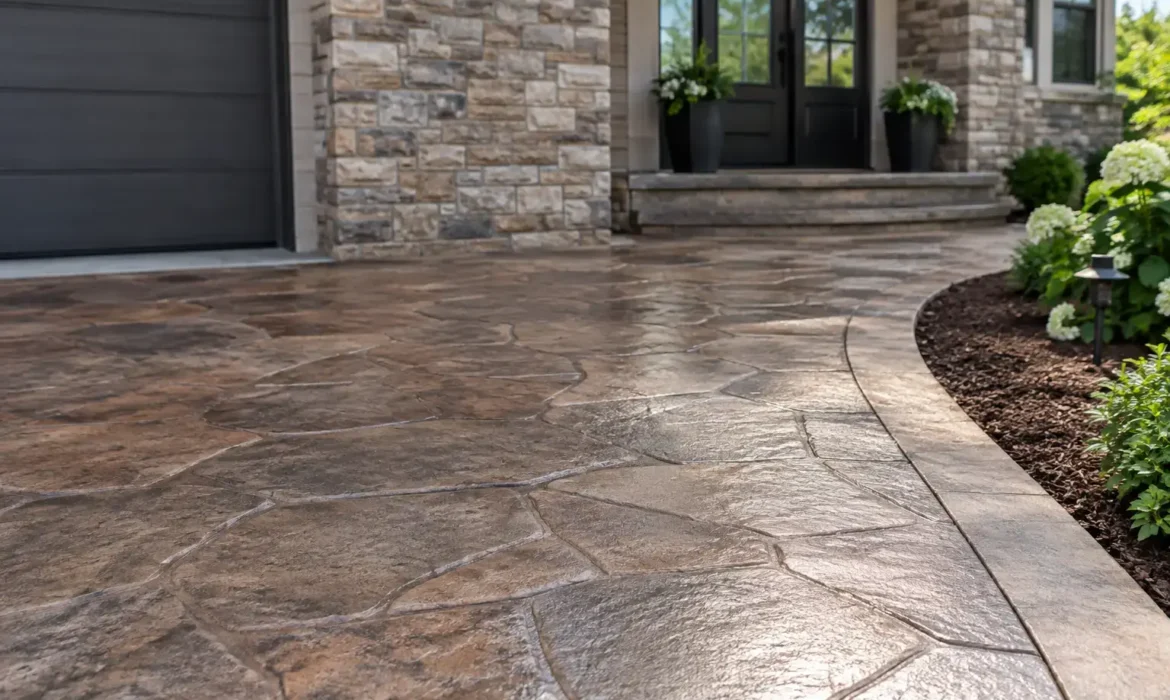
A plain concrete slab can do its job for decades, but it does little to define an entrance, patio, pool surround, or outdoor gathering space. Decorative concrete stamping gives property owners a way to add the visual character of natural stone, brick, slate, or textured tile while retaining the dependable strength of professionally installed concrete.
For Maryland homes and commercial properties, the appeal is practical as much as visual. A stamped surface can create a more finished first impression, improve the look of outdoor living areas, and provide a durable hardscape designed for changing seasons, regular foot traffic, and everyday use. The result depends on much more than choosing a pattern. Proper base preparation, concrete placement, timing, finishing, and protection all determine how well the surface performs over time.
What Decorative Concrete Stamping Can Transform
Concrete stamping is a finishing process that textures freshly placed concrete with specialized mats or tools. Color is often integrated into the surface, with additional color applied to create depth and highlight the pattern. When handled by an experienced concrete crew, the finished slab has joints, texture, and visual variation that keep it from looking flat or artificial.
This approach works particularly well where a property needs both function and a stronger visual presence. Homeowners often choose stamped concrete for patios, front walks, steps, garden paths, and poolside areas. Commercial and multi-unit properties may use it to enhance building entrances, pedestrian walkways, courtyards, outdoor seating areas, and other high-visibility features.
A stamped surface is not meant to copy natural materials perfectly. Its value is in delivering a cohesive, attractive surface with fewer individual pieces to shift, settle, or separate. A stone-inspired pattern can complement a traditional home, while cleaner textures and more restrained colors may fit a contemporary office, retail, or multifamily property.
Choosing the Right Decorative Concrete Stamping Design
The best pattern is usually the one that fits the property rather than the one that makes the boldest impression in a sample. A large patio can support a more pronounced stone or slate pattern because there is room for the design to read naturally. Narrow walkways and smaller entry pads often benefit from a simpler texture, a smaller-scale pattern, or a border that defines the edge without overwhelming the space.
Color deserves the same level of thought. Earth tones, warm grays, soft browns, and muted charcoal shades tend to work well with Maryland brick, siding, stone veneers, landscaping, and existing hardscape features. Highly varied color can add dimension, but too much contrast may make a surface feel busier than intended. A professional consultation should consider the building exterior, roof color, nearby retaining walls, driveway materials, and the amount of shade the area receives.
Borders are one of the most effective ways to give a stamped concrete installation a finished appearance. A contrasting band around a patio or walkway can frame the space, connect it to nearby architectural details, and make the overall layout feel intentional. This is especially useful for larger concrete areas where one continuous pattern might otherwise appear too expansive.
Performance Starts Below the Surface
The visible texture gets attention, but the work beneath the concrete is what supports long-term performance. Soil conditions, drainage, the planned use of the area, and the transition to surrounding surfaces should all be evaluated before placement begins. A patio used for seating has different demands than a driveway extension or a commercial walkway that sees steady daily traffic.
Proper grading helps move water away from structures and prevents standing water from becoming a recurring problem. A well-prepared base supports the slab evenly, while appropriate reinforcement and carefully planned joints help manage the natural movement of concrete as it cures and responds to seasonal temperature changes.
This is why decorative work should never be treated as a thin visual layer added to a poorly planned slab. The stamp pattern and color are only as dependable as the concrete installation underneath them. At All Star Contracting Services, the goal is to build surfaces that look refined on completion day and continue serving the property well through years of weather and use.
The Installation Process Requires Timing and Control
Stamped concrete is a detail-sensitive installation. After the area is prepared and concrete is placed, the crew must level and finish the surface before it reaches the right stage for texturing. Stamp mats must be positioned carefully so the pattern flows consistently, joints are planned in practical locations, and edges receive the attention needed for a clean finish.
Color application also requires control. Integral color creates a more consistent foundation throughout the concrete, while surface-applied release color can add depth and help define the pattern. The right method depends on the desired appearance, the chosen texture, and the property owner’s maintenance expectations.
Weather can influence scheduling. Excess heat, cold conditions, rain, and rapid shifts in temperature can affect placement and finishing. An experienced contractor monitors conditions and schedules work carefully rather than rushing a decorative installation into unsuitable circumstances. That attention protects both the appearance of the surface and the quality of the finished concrete.
Where Stamped Concrete Works Best
Stamped concrete is an excellent choice for many exterior areas, but it is not the answer for every surface. It performs especially well on patios, walkways, entry pads, courtyards, and gathering areas where visual impact and pedestrian use are central to the project. It can also be considered for certain driveways or vehicle areas when the slab design and expected traffic are properly evaluated.
There are trade-offs to consider. Deeply textured patterns may collect more dirt or debris than a smooth broom-finished walkway. Darker colors can show dust, pollen, and surface wear differently than lighter shades. Near a pool or on a sloped walkway, the pattern and finish should be selected with traction and daily use in mind. The best choice is not simply the most decorative one. It is the one that supports how people will actually use the space.
For commercial properties, consistency matters. A decorative entrance or pedestrian zone should complement the rest of the site without creating a surface that is difficult to maintain. Simple patterns, balanced colors, and a layout that directs visitors naturally toward entrances often deliver the strongest return in appearance and usability.
Protecting a Stamped Concrete Surface
Stamped concrete benefits from regular care, especially in a climate with freezing temperatures, moisture, summer heat, and seasonal debris. Routine sweeping and gentle washing help keep texture and color visible. Promptly cleaning spills can reduce the chance of surface staining, particularly in outdoor dining areas, driveways, and high-use patios.
A quality protective sealer helps preserve color, improve resistance to moisture and staining, and refresh the surface’s appearance. Resealing needs vary based on traffic, exposure to sun and moisture, and the type of finish selected. Areas with frequent foot traffic or vehicle activity may need attention sooner than a covered patio used occasionally.
Avoid harsh cleaning methods or materials that can damage the protective finish. During winter, use care with deicing products and follow maintenance guidance for the specific concrete surface. Small issues are easier to address early, before moisture and repeated seasonal movement turn them into more noticeable concerns.
A Better Outdoor Surface Begins With a Clear Plan
Decorative concrete should make a property feel more complete, not create another maintenance worry. The right design balances color, texture, drainage, traffic needs, and the character of the surrounding property. It also accounts for the practical details that affect how the concrete will look after its first season, not only on the day it is installed.
Whether the goal is a more welcoming front entry, a patio built for family gatherings, or a polished commercial walkway, start with a conversation about how the space needs to perform. A thoughtful plan and skilled installation can turn an ordinary slab into a durable feature that continues to add value every time someone walks across it.