
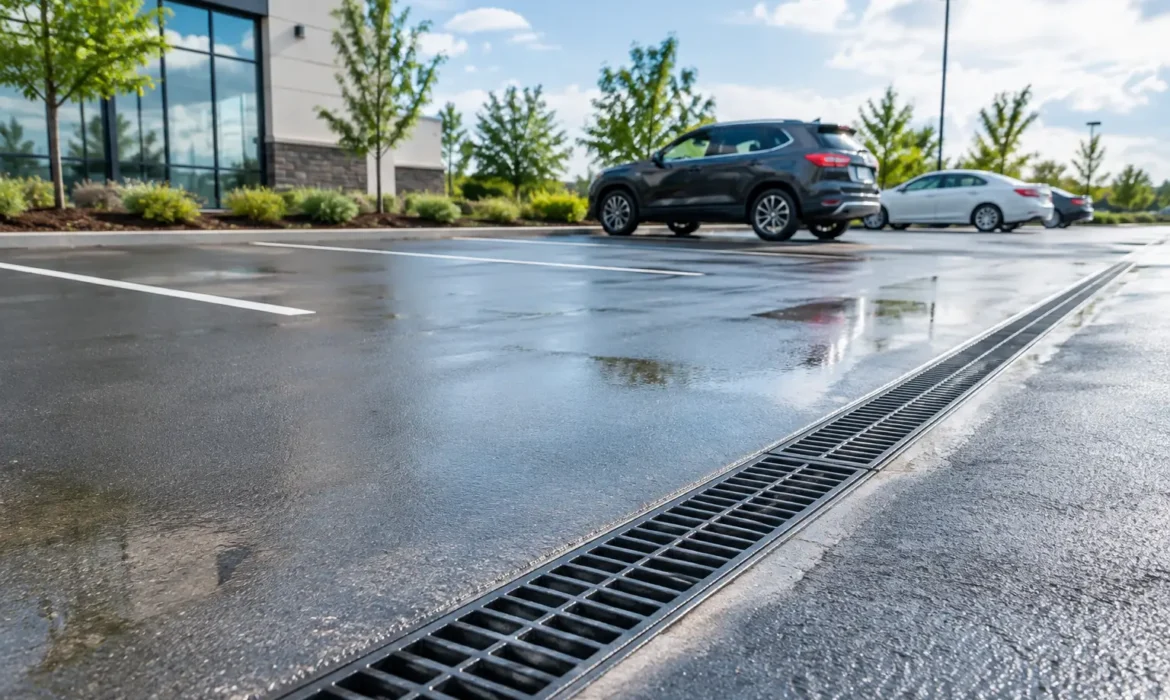
A parking lot can look acceptable at noon and reveal its real condition during the next hard rain. Water pooling at entrances, along wheel paths, or near parking spaces creates an immediate safety concern and quietly shortens the life of the pavement below it. The best parking lot drainage upgrades do more than move water away quickly. They protect the asphalt base, direct runoff intentionally, and keep the property looking maintained through Maryland’s changing weather.
For commercial property owners and facility managers, drainage is not a cosmetic add-on. It is a practical part of protecting a much larger pavement investment. The right improvement depends on where water originates, where it collects, how the lot is used, and whether the problem is isolated or built into the existing grade.
Start With the Source, Not the Puddle
The lowest visible puddle is not always the actual drainage problem. Water may be arriving from a sloped drive lane, an adjacent landscaped area, a roof discharge point, or a section of pavement that has settled over time. A proper site evaluation follows the flow of water across the entire surface before recommending a repair.
Standing water also tells a story about the pavement. When water remains on asphalt for extended periods, it can enter cracks and joints, weaken the base beneath the surface, and contribute to raveling, potholes, and edge failure. During cold weather, repeated freezing and thawing can make that damage move faster.
Look closely after a rainfall. Persistent pooling, water flowing toward a building, soft pavement near curbs, and recurring potholes in the same location are all signs that surface drainage needs attention. If the lot has been patched repeatedly without resolving those patterns, a more complete drainage upgrade is often the better long-term answer.
Best Parking Lot Drainage Upgrades for Common Problems
A drainage solution should fit the property rather than force every site into the same approach. Some lots need a corrected slope. Others need a way to capture concentrated water before it crosses a pedestrian area or damages the pavement edge.
Regrading and Asphalt Reconstruction
When an entire section of parking lot drains poorly, regrading is often the most effective upgrade. This process involves removing failed pavement where needed, rebuilding the base, and establishing a consistent surface slope that guides water toward the intended collection area.
Regrading is especially valuable where an old lot has settled, been patched at different elevations, or received overlays that changed the original drainage pattern. An asphalt overlay can improve appearance and riding quality, but it will not correct a serious slope issue on its own. In some cases, adding new asphalt over an improperly graded area simply moves the water problem somewhere else.
The trade-off is that reconstruction is more involved than a localized repair. However, when broad sections hold water or show base damage, correcting the grade can prevent ongoing patchwork and help the new pavement perform as intended.
Catch Basins and Drain Inlets
Catch basins and drain inlets collect runoff at low points and direct it into the site’s drainage system. They are a strong choice for lots where water naturally concentrates in defined locations, such as the end of drive lanes, along curbed islands, or near building-side parking areas.
For these systems to work well, the surrounding pavement must be carefully shaped. A basin that sits too high can leave water circling around it. One that has settled below the pavement can create a rough depression that catches tires and accelerates asphalt failure. Repairing or resetting aging structures while addressing the surrounding pavement gives the drainage system a better chance of lasting.
Regular cleaning matters, too. Leaves, sediment, and debris can restrict water flow, turning a working inlet into a source of standing water during a storm.
Trench Drains for Concentrated Runoff
A trench drain is a long, narrow channel installed across a path of water flow. It is particularly useful at garage entrances, loading areas, drive-through lanes, dumpster pads, and transitions where water tends to rush from one paved area toward another.
This type of upgrade captures water before it travels across a high-traffic surface. It can be a smart option when changing the grade of a large pavement area would be disruptive or unnecessary. The drain must be sized and placed carefully, though. A channel that is too shallow, poorly positioned, or neglected can fill with debris and lose effectiveness.
Trench drains work best as part of an overall drainage plan, not as a substitute for correcting a severely uneven lot. If water is pooling across several areas, the underlying grade still deserves attention.
Curbing, Gutters, and Swales
Water does not always need to be captured immediately. On properties with room along the perimeter, curbing and shallow swales can guide runoff away from the pavement edge and toward an appropriate receiving area. This approach is often effective where water sheets off a parking lot into landscaping or where pavement has begun deteriorating along a low outer edge.
Curbs can help control the direction of runoff, but they can also trap water if the pavement beside them is not pitched correctly. The detail work matters: curb lines, pavement slope, and collection points must work together. A visible curb without a clear path for water is not a full drainage solution.
Subsurface Drainage for Saturated Areas
Some drainage failures begin below the pavement surface. If soil stays saturated near the lot, water can weaken the aggregate base and create soft spots that return even after patches are installed. Subsurface drainage may be appropriate in these situations to intercept water below grade and help keep the base drier.
This improvement is commonly considered when pavement failure repeats along a hillside, near landscaped borders, or in areas that remain soft long after the surface water is gone. It is less visible than a new inlet or channel drain, but it can make a major difference in pavement stability when groundwater or trapped moisture is the underlying issue.
Permeable Paved Areas Where They Make Sense
Permeable pavement can allow water to pass through the surface into a prepared stone base below. It may be useful for lighter-use overflow areas, walkways, or selected parking sections where reducing surface runoff is a priority.
It is not automatically the best fit for every commercial lot. Heavy traffic, maintenance practices, soil conditions, and the need to prevent surface clogging all affect performance. For primary vehicle lanes and heavily loaded areas, conventional asphalt or concrete with well-designed drainage is often the more dependable choice.
Protect Drainage Improvements With Better Surface Maintenance
Even a well-planned drainage system can lose effectiveness if the surrounding pavement is neglected. Cracks allow water into the structure, uneven repairs disrupt flow, and debris builds up where water is supposed to enter drains. Routine inspection after storms helps property managers catch small issues before they become larger surface failures.
Sealcoating can help protect sound asphalt from weathering and surface wear, but it should be applied after drainage concerns and needed repairs are addressed. A freshly sealed lot may look renewed, yet water will still collect in the same low areas if the grade has not changed.
Parking lot striping should also be considered after major drainage or paving work. Clear markings help guide vehicles away from newly configured islands, curbs, and collection areas while restoring a polished, organized appearance.
Choosing the Right Scope of Work
The best decision comes from matching the repair to the condition of the lot. A single low spot near an entrance may need a localized reconstruction and drain upgrade. A lot with widespread ponding, cracking, and patching may benefit more from phased pavement reconstruction with corrected elevations.
Before work begins, a contractor should evaluate traffic patterns, pavement condition, existing drainage structures, adjacent grades, and the areas where customers and employees walk. This makes it possible to improve water flow without creating new trouble at drive lanes, entrances, or neighboring surfaces.
All Star Contracting Services helps Maryland property owners take a practical, durable approach to exterior improvements. A careful on-site assessment can identify whether the right next step is targeted drainage repair, pavement reconstruction, concrete work, or a coordinated combination of services.
Water will always find a path. Giving it a deliberate one is one of the most effective ways to protect your parking lot, support safer daily access, and keep the property ready for the next storm.